Heads up: this page has affiliate links. As an Amazon Associate, Vent & Valve earns from qualifying
purchases at no extra cost to you. Full disclosure.
New cover, or a problem further along the exhaust path?
ProblemA broken coverMay need replacing.
ProblemSlow drying, a stuck closure or lint at the outletAlso calls for checking the exhaust path. Start with the slow-drying checks; buying a different hood is not a diagnosis.
Record these details from a safe, accessible position.
ApplianceDryer model, permitted termination and clearance requirements from its installation manual.
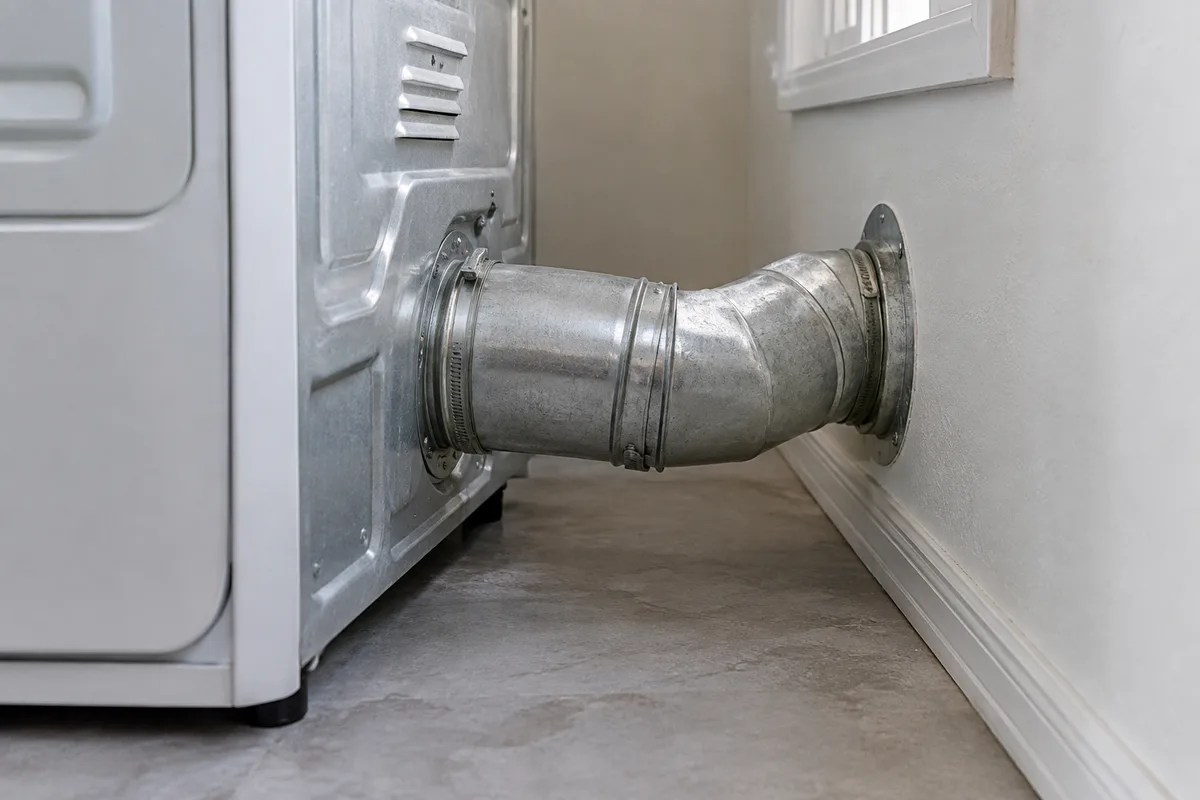
ConnectionDuct diameter, condition and projection from the finished wall. Does the new part include a pipe, use the existing one, or fit inside it?
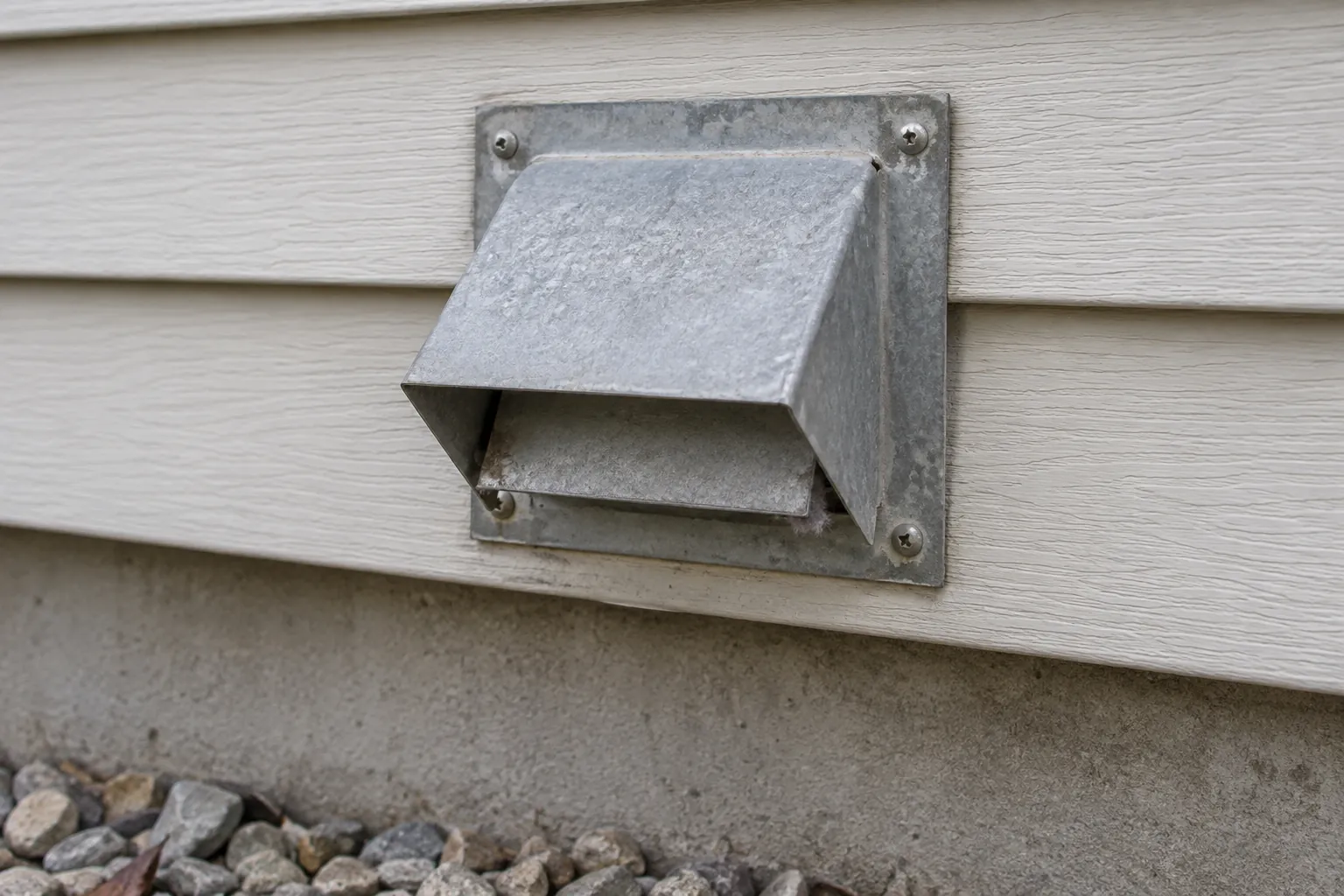
MountingOld cover's width and height, fastener positions, wall opening and siding profile. Check the new drawing, not just the duct size.
Moving partsRoom for the damper or shuttle to open, plus access to remove the lid or face for maintenance.
LocationRequired separation from grade, openings and other equipment. Allow for snow or vegetation without inventing a new termination location.
Check the mounting plate, fasteners and closure, not just the duct size.
Before replacing
Maintain it, or get help
Maintain first: if the cover is intact and the problem is debris, follow its maintenance instructions first.
Get help for:
A high outlet.
An obstruction you cannot safely reach.
Loose concealed duct.
Damaged siding.
The roof-vent guide covers a different access problem; these wall covers are not roof terminations.
Check the termination as an assemblyMatch the duct opening, mounting area and closure movement. A replacement cover must allow the dryer exhaust to leave the house.
02
The picks, by replacement job
Four designs with different mounting and maintenance needs.
Outdoor dryer vent covers: check fit and the listed limitation before shopping
For replacing a louvered face when the existing connection is suitable
Budget
Deflecto lists the Supurr-Vent louvered hood as a hood for 4-inch pipe. That makes it a candidate when the exterior face needs replacing and the duct connection can remain.
Check the mounting dimensions before ordering. A hood-only purchase does not replace damaged wall pipe. Inspect the louvers periodically; a light moving part is not a promise that it cannot stick.
ConnectionFor 4-in diameter pipe
IncludedLouvered hood; not a hood-and-pipe kit
ClosureMovable louvers
CheckMounting footprint and existing pipe condition
Skip it if: the wall pipe also needs replacing, or the mounting dimensions do not match.
Before buying: Match HS4W and confirm the package contents. A similar-looking Deflecto kit can include different parts.
Affiliate link. As an Amazon Associate we earn from qualifying purchases. How this works.
For a compatible wall installation that needs a hood and pipe
Mid-range
The ProMax product page lists a wide-mouth cap, backdraft damper, pipe assembly and removable pest screen. Its white PMH4WZW model is a 4-inch version. Check the screen before connecting the hood to dryer exhaust.
Read the current installation sheet (PDF) before purchasing mounting supplies. Do not choose it as a cure for a long or restricted duct; the cap's shape alone cannot establish adequate system airflow.
Connection4-in hood with snap-together pipe assembly
ClosureSingle backdraft damper
ScreenRemovable pest screen; not for dryer exhaust
CheckPipe length, mounting surface and supplied instructions
Skip it if: the pest screen cannot be removed as intended, or the assembly does not match your dryer and wall.
Before buying: Match PMH4WZW. Confirm the dryer configuration with the supplied instructions or manufacturer; do not leave the pest screen across a dryer exhaust.
Affiliate link. As an Amazon Associate we earn from qualifying purchases. How this works.
For a wall with room for an upright, accessible shuttle closure
Mid-range
Heartland's dryer-closure page describes a shuttle that lifts with exhaust and settles when the dryer stops. It lists a 4-inch connection and a removable lid for cleaning.
Choose this design only if you can keep that service access clear. The moving cup still needs maintenance. We have not measured air leakage or heating-bill savings, and the closure does not make a blocked exhaust usable.
Connection4-in duct
ClosureFloating shuttle inside a lidded body
AccessLeave room to remove the lid and clean the shuttle
CheckBody space, wall connection and mounting instructions
Skip it if: the body or service lid will be obstructed, or you cannot verify the required mounting arrangement.
Before buying: Match model 21000 and compare the complete assembly with your available wall space. Follow its finish and maintenance instructions.
Affiliate link. As an Amazon Associate we earn from qualifying purchases. How this works.
For a low-profile metal cover with a compatible wall connection
Premium
InOvate's specifications and installation guide shows a metal body, a gravity-assist damper and closure magnets. The standard installation expects the 4-inch duct to finish flush with the exterior substrate.
Compare your opening with the dimensioned drawing (PDF), including the collar and secondary backing plate. Do not assume the old screw pattern or pipe projection will suit it. Its metal construction does not remove the need to inspect and clean the closure.
Connection4-in duct; check collar version
MaterialPowder-coated Galvalume steel
ClosureGravity-assist damper with closure magnets
CheckDuct projection and backing-plate dimensions
Skip it if: the standard collar cannot fit your existing duct or the backing plate will not cover the opening.
Before buying: Match the white DryerWallVent and verify its collar configuration. The manufacturer's standard and no-collar installation details are different.
Affiliate link. As an Amazon Associate we earn from qualifying purchases. How this works.
Hood-only faces, projecting assemblies and flush-mounted collars do not share one removal or sealing routine.
Follow the product instructions and the wall's weatherproofing requirements.
Ask a qualified installer about damaged surfaces, concealed joints or a relocated outlet.
04
Selection method and source limits
Manufacturer documents checked September 16, 2026.
Why calimaero HWG is no longer a pick here: the manufacturer's HWG datasheet (PDF) describes general ventilation models. We could not establish the exact U.S. dryer configuration and connection behind this guide's previous recommendation. Stainless steel and a backflow flap alone do not settle that question. We have removed the shopping placement rather than assume compatibility.
Read how this comparison was checked
We compared documented application, connection, closure design, included parts and maintenance access. The order groups useful replacement jobs; it is not a measured performance ranking. Manufacturer statements about energy savings, pest exclusion or service life are not independent test results.
Sources are linked beside each model and the relevant fit checks. We did not install these covers, measure static pressure or verify current seller stock. Match the exact model and supplied instructions before buying. Our selection method explains the research boundary.
05
Vent cover questions, answered
Sizing, snow, screens and replacement.
Are dryer vent covers universal?
No. A nominal 4-inch duct connection does not establish the mounting-plate size, pipe projection, siding fit or clearance for the closure to open. Check the exact cover drawing and your dryer manual. A hood-only replacement and an assembly supplied with a wall pipe are different purchases.
Is a dryer vent cover necessary?
A vented dryer's outdoor termination needs an appropriate backdraft damper. PNNL's dryer-venting guidance calls for a closing damper without a screen across the exhaust. Keep it accessible for inspection and cleaning. No cover makes the exhaust path maintenance-free or guarantees that pests cannot enter.
How do you remove an old dryer vent cover?
Identify how the cover, wall pipe and siding are joined before loosening anything. Follow the replacement manufacturer's instructions and avoid pulling an attached duct joint apart inside the wall. Get qualified help for inaccessible ductwork, damaged wall material, a high outlet or a change to the termination location. There is no single removal or caulking procedure for every cover.
Are plastic dryer vent covers safe?
Some manufacturers make plastic exterior hoods specifically for dryer exhaust. That does not approve plastic transition hose or concealed duct. Select a cover intended for the application, follow the appliance instructions, and replace damaged parts. Material alone does not establish airflow, fit or service life.
What type of dryer vent cover is best?
Choose a dryer-exhaust termination that matches the appliance instructions and the wall connection, has a freely moving closure, and does not leave a screen across the exhaust. Compare access for cleaning and the space each design needs. A new cover cannot correct a blocked duct, an unsuitable run or an appliance fault.
What happens if snow covers the dryer vent?
Snow can block the exhaust outlet. Keep the dryer off until the outlet is clear and the closure can move as intended. Do not use a cycle to melt an obstruction. If the location repeatedly becomes buried, ask a qualified installer to assess it against the dryer instructions and local requirements before moving the outlet.