Heads up: this page has affiliate links. As an Amazon Associate, Vent & Valve earns from qualifying
purchases at no extra cost to you. Full disclosure.
Match the lubricant to the service pointCheck the door and opener instructions for approved products and locations. Different hinges, rollers and bearings have different maintenance requirements.
01
Silicone or white lithium, by part
Two cans cover the whole door. Here is the split.
The slick parts
Silicone
Sprays on thin, wicks into tight clearances, and dries to a slick film that does not grab dust.
Stays flexible in the cold, which is why a silicone-treated door sounds the same in January as it does in July.
Use it on: nylon rollers, hinge pivots, the spring coils, weather seals, and anywhere plastic touches metal.
The loaded parts
White lithium
Goes on as a liquid and sets into a thick white grease that clings under pressure.
That cling is the point: parts that carry real load want grease that stays in the contact patch.
Use it on: steel hinges, roller bearings, the bearing plates at the ends of the spring bar, and a screw-drive opener rail. All of them carry real load.
The trade: lithium stiffens in deep cold and grabs more dust than silicone, so use it where the load is, not everywhere.
02
The picks
Two silicones, two lithiums. Most doors want one of each.
Best for: the default can, a silicone spray made specifically for door hardware
Mid-range
This is the can the category is named after, and it earns the spot. The spray goes on wet
enough to creep into hinge pivots and roller bearings, then sets to a dry slick film that
does not hold dust. The flip-up straw matters more than it sounds: stream mode reaches the
top hinges and spring coils from a step ladder without misting the car. One can does a
double door twice a year for years.
Skip it if: your hinges and bearings are bone-dry steel under heavy load. Pair this with a lithium can instead of asking silicone to do grease work.
02
B'laster Garage Door Lubricant
Best for: the same silicone job at a value price, with a straw you aim into tight pivots
Budget
B'laster built its name on penetrating oil, and its garage door silicone is the
straightforward alternative to the 3-IN-ONE can: same chemistry family, same tack-free
film, routinely the value pick of the two. Performance differences between these silicones
are smaller than the difference between either and a door that never gets sprayed. Buy
whichever is on the shelf and do the job this weekend.
Skip it if: you want one can for every part including loaded steel bearings. Same answer as above: silicone quiets, lithium carries load.
03
WD-40 Specialist White Lithium Grease
Best for: hinges, bearings, and screw-drive opener rails, the metal-on-metal half of the job
Mid-range
Yes, the company we warned you about. The Specialist line is real lubricant, and this can
is the right one: it sprays as a thin liquid that reaches into the bearing, then sets up
as a white grease that stays in the contact patch under load. Steel hinge pivots, the
bearing plates at the spring bar ends, and screw-drive rails are its territory. Keep it
off the weather seal, where lithium can swell some rubbers, and keep both cans in the
garage.
TypeWhite lithium grease spray
Size10 oz aerosol
BehaviorSprays thin, sets to a clinging grease
Best onSteel hinges, bearings, screw rail
Cold noteStiffens in deep cold; silicone for seals
Skip it if: your whole door is nylon rollers and vinyl seals. Silicone covers that door by itself.
04
CRC White Lithium Grease
Best for: the budget lithium can from a shop-brand name, same chemistry, fewer frills
Budget
CRC is a workhorse industrial brand, and this is the no-story version of lithium grease:
sprays on, sets up, clings through weather. It covers the same hinge and bearing duty as
the WD-40 Specialist can, typically a notch cheaper, with a simpler nozzle. If the
garage shelf already holds CRC products, stay in the family and put the savings toward a
better silicone.
Skip it if: you need pinpoint stream control for high hinges. The two-way straws on the picks above aim better from a ladder.
03
The application walkthrough
Door down, opener unplugged, ten minutes.
Door down and opener unplugged before the first spray.
Close the door and unplug the opener. You will be working with fingers near hinges and rollers. Make sure nobody can cycle the door, including a family member with a remote.
Wipe the tracks dry. Rag only, no spray. Clear out leaves, cobwebs, and old grease someone else applied. The tracks stay dry forever.
Hit every hinge pivot. One short burst at each pivot point, top of the pin so gravity pulls it in. Steel hinges take lithium, all hinges accept silicone.
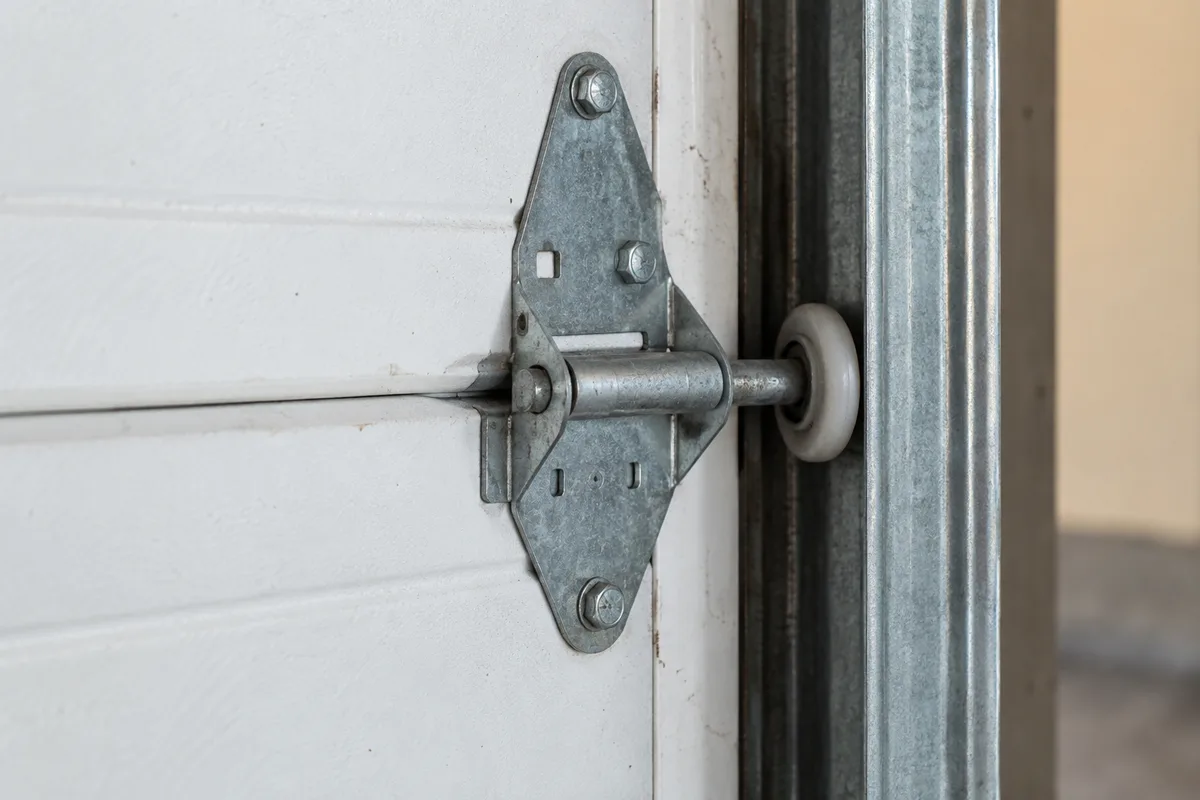
Do the rollers at the stem. Spray where the stem enters the wheel, which is where the bearing lives. Nylon rollers get silicone only. Wipe overspray off the wheel face so the track stays clean.
Mist the springs and the bearing plates. A light, even pass along the torsion coils from arm's length quiets the creak under load. Hit the round bearing plates at each end of the spring bar.
Treat the opener rail by type. Screw drive: white lithium along the screw. Chain drive: the chain is usually factory-lubed, so just the trolley contact points. Belt drive: nothing on the belt, ever.
Plug in and cycle the door three times. The first cycle spreads the film, the third one tells you the truth. Any noise that survives is a worn part, not a dry one.
04
How we picked
Chemistry, data sheets, and documented owner patterns.
We rank on manufacturer data sheets and consistent long-term owner reports:
What each product is actually made of.
How the film behaves in cold and dust.
How the nozzle works from a ladder.
No staged squeak tests, no scraped review scores. The full method is on our how we pick gear page.
05
Garage door lubricant questions
Mined straight off the search results page.
Garage door lubricant vs WD-40: what is the difference?
The blue-can WD-40 is a penetrating oil and water displacer. It frees stuck parts and cleans grime, then mostly evaporates, leaving the metal close to dry and sometimes stripping the grease that was doing the work. Garage door lubricant is silicone or white lithium that stays on the part for months. Use the blue can to clean a gummed hinge if you must, then follow it with real lubricant. Note that WD-40's Specialist line includes proper lubricants, which are fair game.
Is garage door lubricant silicone or white lithium?
Both exist and both are correct, on different parts. Silicone sprays go on thin, dry to a slick non-sticky film, and stay flexible in the cold, which suits nylon rollers, weather seals, and anything plastic. White lithium is a thicker grease that clings to metal-on-metal contact, which suits steel hinges, roller bearings, and the opener's screw rail.
Can you lubricate garage door springs?
Yes, and you should: a light, even mist along the torsion spring coils quiets the creak the door makes under load and slows rust. The rule is spray only. Do not adjust, unwind, or unbolt anything attached to a spring, and keep your hands off the winding cones. Spring tension work belongs to a door tech.
Where do you spray garage door lubricant?
Hinges at their pivot points, roller bearings where the stem meets the wheel, the torsion spring coils, the bearing plates at each end of the spring bar, the arm pivots on the opener, and the opener's rail if it is a screw drive. Wipe the tracks clean with a dry rag and leave them dry. Door down and opener unplugged before you start.
Is garage door lubricant flammable?
The aerosol propellant is, while you are spraying it. Keep the can away from pilot lights, heaters, and sparks, and let the mist settle before running the opener. Once the carrier flashes off, the silicone or lithium film left on the parts is not a meaningful fire concern. Treat the can like any aerosol: garage shelf, not on top of the water heater.
Got the cans? Now put the job on a schedule.
How often to lubricate a garage door
covers the by-household calendar and decodes the noises, and the
garage door hub draws the line between homeowner jobs and
spring-tension jobs you should never touch.