Option 1
OEM cartridge
- The guaranteed fit with the full certification sheet.
Heads up: this page has affiliate links. As an Amazon Associate, Vent & Valve earns from qualifying purchases at no extra cost to you. Full disclosure.
Option 1
Option 2
The three numbers that separate real filters from marketing.
Aesthetics
Health
This is the certification that matters most.
Emerging contaminants
Nice to have, not the dealbreaker.

The rule: a trustworthy filter names its certifications and the certifying body, NSF, IAPMO, or WQA, and shows up in that body's public database.
A package shouting "removes 99 percent of everything" without a standard number is telling you what it thinks you want to hear.
Buy carefully, inspect on arrival
Protect yourself two ways. Buy listings sold by or shipped from the manufacturer or a reputable retailer, and inspect what arrives: real cartridges have crisp printing, tight seams, and dated seals.
A genuine-looking filter at a too-good price from a no-name seller is the classic fake.
The everydrop numbering covers the whole Whirlpool family.
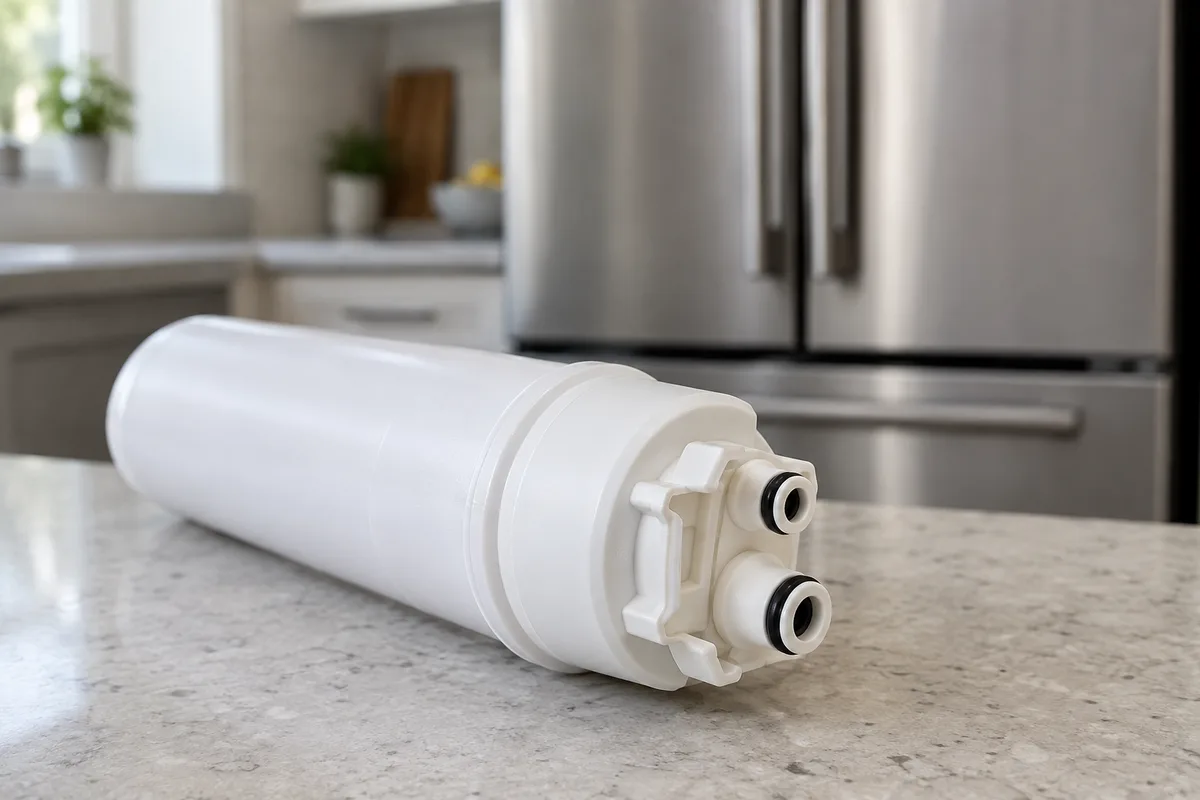
Whirlpool consolidated its filters under the everydrop brand, numbered 1 through 6 by fridge series. The number for your model is printed on the old cartridge and in the manual. Filter 1, the EDR1RXD1, is the highest-volume example and the one shown here; the OEM-versus-aftermarket logic is identical for the other numbers.
Top picks at a glance
Best for: Whirlpool-family fridges when you want the OEM cartridge and the full certification sheet.
The reference cartridge. everydrop's Filter 1 carries certification across NSF 42, 53, and 401 with one of the longest contaminant lists in the category, and the fit in Whirlpool housings is exact, which matters when a quarter-turn seat misaligning is the top cause of stuck and leaking filters. Buy it from the manufacturer listing, not the cheapest marketplace seller wearing the same product photo.
Skip it if: the per-cartridge price grates and a certified aftermarket fits your risk tolerance. That is what the Waterdrop below is for.
Best for: cutting the per-cartridge cost on Whirlpool-family fridges without giving up certification.
Waterdrop is the certified end of the aftermarket: a real company with NSF-listed products, not a marketplace ghost brand. The honest trade-off is on the spec sheet. You keep the fit and the chlorine performance for far less money, but the certification list is shorter than the OEM's. On well-treated city water where taste is the goal, that trade is sensible. Where lead is a concern, pay for the everydrop.
Skip it if: lead reduction is the reason you filter. This cartridge's certification covers taste and materials safety, not the NSF 53 health claims the OEM carries.
HAF-CIN for most models, and the heaviest counterfeit traffic in the category.
Most Samsung fridges from the last decade take the HAF-CIN cartridge, also sold under its part number DA29-00020B; newer Family Hub models take the HAF-QIN. Samsung filters are counterfeited more than any other brand here, so the buy-from-a-reputable-seller rule applies double.
Best for: Samsung fridges where dispenser flow and a leak-free seat matter most.
Samsung housings are sensitive to cartridge tolerances, and the genuine HAF-CIN is the boring, correct answer: certified lead reduction, proper flow rate, and a seat that turns home without a fight. Verify the holographic seal and printing when it arrives. A fake HAF-CIN does not just filter poorly, it is the cartridge most likely to jam or leak in the housing.
Skip it if: your model is a newer Family Hub unit. Check the door sticker first; those take the HAF-QIN, and the two do not interchange.
Best for: Samsung owners who change on schedule and want the cost per change down.
AQUA CREST is the established certified aftermarket for Samsung seats, with listed NSF 42 certification and a fit that respects the quarter-turn geometry. Multipack pricing turns the six-month change into a trivial expense, which has a real side benefit: people who stock cheap certified spares actually change them on time, and an on-schedule budget filter beats an overdue premium one.
Skip it if: you need the NSF 53 lead claim. Like most certified aftermarkets, the certification here is the taste standard, not the health standard.
LT700P covers most LG French-door models of the last decade.
Best for: LG and LG-built Kenmore Elite fridges using the push-in cartridge.
LG's push-button housings are the easiest of the bunch to service, and the genuine LT700P keeps them that way with consistent collar dimensions. Kenmore Elite owners take note: many of those fridges came off LG lines and take this exact cartridge under a Kenmore part number. Confirm with the model plate and buy whichever brand of the same part costs less that day.
Skip it if: your LG is newer and lists the LT1000P. The two cartridges look similar and do not interchange; go by the model sticker, not the photo.
RPWFE, the one with the RFID chip that locks out copycats.
Best for: GE fridges that require the chipped cartridge. There is no real aftermarket escape here.
GE put an RFID chip on the RPWFE, and the fridge reads it. Uncertified copies without the chip trigger leak errors or shut the dispenser down, and the chip-bypass workarounds floating around forums defeat the leak detection GE built into the door. Buy the genuine cartridge from a first-party listing and be done. The certification sheet is excellent; the captive pricing is the trade-off, and it is honest to call it that.
Skip it if: your GE takes the older RPWF without the chip. That housing accepts certified aftermarket cartridges; only the RPWFE generation enforces OEM.
The decision tree is short.
That is the entire method.

The six-month habit
If yours is already fighting you, the stuck filter fixes come next.
Cheap insurance
A leak detector near the sink and fridge is the cheap insurance that pairs with this job.
Safety, certifications, and disposal.
Certified ones, yes. An aftermarket filter carrying real NSF/ANSI 42 and 53 certification has passed the same third-party tests OEM filters pass. The unsafe corner of the market is the uncertified no-name cartridge with invented claims. Check for the certification mark and look the brand up in the NSF listing database if you want certainty.
Usually better on paper. A typical fridge filter is a solid carbon block certified under NSF 42 and 53, often including lead reduction. Standard pitcher filters are loose granular carbon certified mainly for taste and chlorine. The pitcher wins on price, not performance. Check the specific certifications on both before deciding.
No. A sealed carbon filter does not age sitting in its packaging, so buying multipacks is safe. The 6-month clock starts when water starts flowing through it. Store spares sealed and dry, and flush a few gallons through any newly installed filter before drinking.
Not curbside. The mixed plastic shell and saturated carbon disqualify them from household recycling bins. Some manufacturers run mail-back programs, including a Whirlpool partnership for everydrop filters, and some municipal hazardous-waste events take them. Otherwise they go in the trash.
Exactly what their certifications say and nothing more. A typical NSF 42 and 53 carbon block reduces chlorine taste and odor, lead, cysts, and some industrial chemicals. Filters adding NSF 401 cover trace pharmaceuticals. They do not soften water, remove dissolved minerals, or meaningfully reduce fluoride.
Compare the gear or work through the next step.
Put it on the seasonal maintenance checklist or browse all guides.