Heads up: this page has affiliate links. As an Amazon Associate, Vent & Valve earns from qualifying
purchases at no extra cost to you. Full disclosure.
Account for the cabinet floor and pipesCheck the sensor footprint and the route a leak could take. Keep the alarm accessible for the testing and battery checks its manufacturer requires.
01
Puck or cable: pick the form factor first
The cabinet decides, not the brand.
The default
Pucks
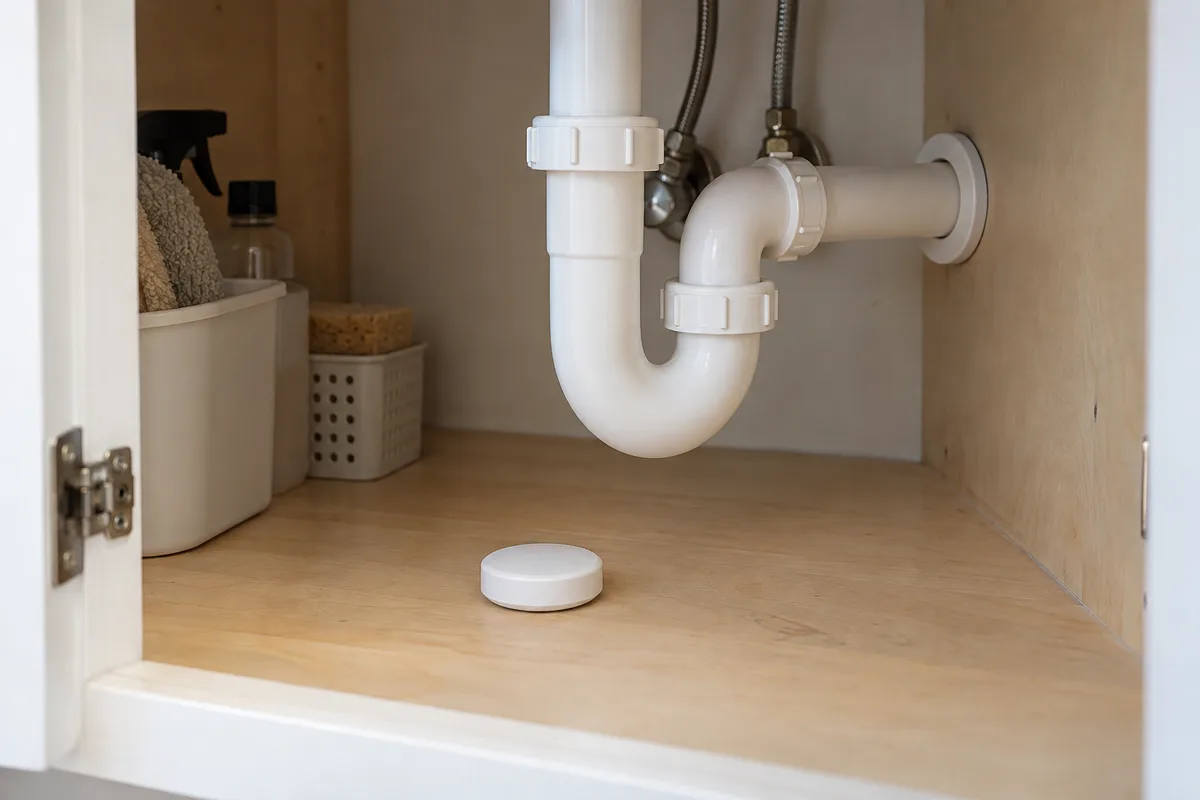
A sealed disc with contacts on the bottom sits flat on the cabinet floor under the trap.
One puck covers a normal sink cabinet because the floor is small and every drip pools on it.
Buy: pucks slim enough to slide behind the trash pull-out without wedging.
Odd layouts
Sensor cables
A cable turns its whole length into the detector.
Wrapped around the supply valves or laid along the back edge, it catches a drip that runs down the line and never lands where a puck sits.
Earns its keep: in deep double-basin cabinets, around garbage disposals, and anywhere a dishwasher line enters the cabinet at an odd angle.
Fix a stuck fridge filter properly instead of forcing it.
The same logic protects the other quiet drip in the kitchen: the refrigerator water line.
That is half the reason a stuck fridge filter is worth fixing properly instead of forcing.
Best for: the one-cabinet fix, a slim puck with years of standby on a single 9V
Budget
The Zircon is what most under-sink spots actually need: a cheap, flat puck that lives on
one 9V battery for years and pulses at 90 decibels when the cabinet floor gets wet. The
kitchen is the best room in the house for a basic screamer because you are near it daily,
so the alert reaches you fast even with no app involved. Buy two and cover a bathroom
vanity with the second.
Skip it if: you travel often. A siren inside a closed cabinet in an empty house is a sound effect.
02
Govee WiFi Water Leak Detector (3-Pack)
Best for: kitchen plus two bathrooms in one box, with phone alerts through a single gateway
Mid-range
Three sinks, one box, one outlet for the gateway. Each Govee puck is slim enough for the
back corner of a sink cabinet, screams locally, and pushes a phone alert with the sensor's
name on it, so the notification says which cabinet to open. Top-face probes also catch a
drip landing on the sensor from the trap above, a genuinely useful detail under a sink.
Hold one sensor for the dishwasher kick panel if your kitchen has one.
Skip it if: you only need one sensor and your phone. A single hubless unit is less hardware to manage.
03
YoLink Water Leak Starter Kit (Hub + 4 Sensors)
Best for: whole-house sink coverage with multi-year batteries and range WiFi cannot match
Mid-range
Four sensors covers the kitchen, both bathrooms, and the laundry valve box, and the LoRa
radio reaches the powder-room vanity at the far end of the house where WiFi pucks drop
off. Battery life is the quiet win: these run for years between changes, which fits gear
that lives behind cleaning supplies. The sensors stay silent by design, so pair this kit
with a phone you actually keep notifications on for.
Skip it if: you want noise at the cabinet. Standard YoLink sensors alert the phone, not the kitchen.
04
Moen Flo Smart Water Leak Detector
Best for: one important cabinet done thoroughly, with a sensing cable option for odd layouts
Premium
The Moen joins WiFi on its own, no hub, and the optional sensing cable is the best answer
in this roundup for a crowded double-basin cabinet: loop the cable around the trap and the
valves and any drip along its run trips the alert. Humidity tracking sounds like a gimmick
until it flags the sweating cold-water line that was about to become your mystery
cabinet-floor stain. It is the most thorough single-spot option here.
Skip it if: you are covering five cabinets. Per-spot, the multi-packs above do it for much less.
03
How to choose for under a sink
Battery, alert path, and the splash question.
Battery
Battery life beats features
The cabinet is out of sight by definition.
A sensor with multi-year standby and a low-battery warning is worth more than any sensor you have to remember to charge, no matter what else it does.
Alert path
Alert path has to match your day
Kitchen sinks live in the busiest room of the house, so a loud basic puck genuinely covers a home-most-days household.
Empty-house schedules need the phone alert.
The smart vs basic comparison walks the whole decision, including the mixed strategy recommended here.
False trips
Mind the disposal splash
A garbage disposal cabinet sees harmless splash when the unit runs with a loose flange or a dishwasher drains hard.
If a sensor false-trips twice in a week, do not move it out of the cabinet.
Fix: slide it sideways out of the splash line but keep it at the low point, and tighten the flange while you are in there, because repeated splash is itself a small leak telling on the fitting.
04
How we picked
Specs, manuals, and documented owner patterns.
Rankings come from manufacturer specs, manuals, and consistent long-term owner patterns, weighted for the two things that decide under-sink duty:
Standby battery claims, checked against battery type.
How do you install a water leak detector under a sink?
There is no install, just placement. Set the puck flat on the cabinet floor at the back, directly under the P-trap and the supply line connections, contacts down. If the cabinet floor sags toward the front, put the sensor where a puddle would actually collect. WiFi models add a one-time app pairing on a 2.4 GHz network before they go in.
What is the best WiFi water leak detector without a hub?
For a single under-sink spot, a detector that joins your WiFi directly keeps it simple, and the Moen Flo detector does that with no extra hardware. Multi-sensor WiFi packs like Govee use one small plug-in gateway for all their sensors, which is a fair trade once you are covering three or more cabinets.
How do water leak sensors work?
Two metal contacts on the underside sit a hair above the surface. Water is conductive, so a puddle that touches both contacts closes the circuit and trips the alarm. That is the whole trick, which is why a sensor with a decade-old design still works and why placement at the low point matters more than any feature on the box.
Do you need a water leak detector under every sink?
Prioritize the kitchen sink first: it has the most connections, the disposal, and often a dishwasher line sharing the cabinet. Then bathroom vanities over finished ceilings, then the rest. A multi-pack covers the whole list for less than one cabinet floor repair.
How long do the batteries last in a water leak sensor?
Basic 9V screamers commonly run two to three years on standby, and battery-powered smart sensors typically claim a year or more, with low-battery warnings in the app. The honest answer is to stop relying on memory: test every sensor with a wet finger when the clocks change, and replace batteries on the warning, not after.
Deciding between a screamer and an app is the real fork in the road, and
smart vs basic water leak detectors
settles it in five minutes. For the placement map across the whole house, start at the
leak detectors hub. The other tank worth a puck is the water
heater, where a sensor in the drip pan buys you warning long before a slow weep becomes a
flooded floor, and the once-a-year
water heater flush keeps the tank from
rusting its way there in the first place.