Heads up: this page has affiliate links. As an Amazon Associate, Vent & Valve earns from qualifying
purchases at no extra cost to you. Full disclosure.
The quick verdict
Occupancy decides this, not technology. Someone home most of the day: a basic alarm is
plenty, spend the savings on more sensors. House empty on workdays, frequent travel, a
rental, or a second home: go smart, because a siren in an empty house is a flood with a
soundtrack. My standing recommendation is the mix: one smart sensor at the water heater,
basic screamers everywhere else.
A remote alert depends on more than the sensorCompare the local alarm with the gateway, Wi-Fi and power requirements of a connected model. These alarms do not all provide automatic water shutoff.Where the two camps split
The contacts get wetBoth camps detect water the same way: two contacts close a circuit when a puddle bridges them.
A radio and an appEverything you are paying for in a smart detector happens after that moment.
A notification finds youAt the office or the airport.
So the real question is simple. When the contacts get wet at 10 a.m. on a Tuesday, who
hears about it, and how fast?
Basic alarm vs smart detector, side by side
Spec
Basic alarm
Smart detector
How it alerts
Siren at the unit, 85 to 100 dB
Phone push anywhere, plus a local siren on most models
Setup
Insert battery, set on floor
App pairing on 2.4 GHz WiFi, sometimes a hub or gateway
Power
9V or AA, multi-year standby
Batteries plus your router; hub models add an outlet
Internet down
Unaffected, fully working
Local siren only, no phone alert until WiFi returns
Reaches you away from home
No
Yes, that is the whole point
Price tier
Budget
Mid to premium
Quiet failure mode
Dead battery, silence; test twice a year
Dropped WiFi or stale app login; most apps warn on low battery
Best spots
Kitchen sink, laundry pan, anywhere people are around
Water heater, basements, rentals, vacation and second homes
01
The case for the basic alarm
Nothing to pair, nothing to update, nothing to forget.
A basic alarm is a battery and a siren, and that poverty of features is its strength.
Simplicity
Nothing to pair or update
It does not care that you changed routers.
It has no firmware, no account, no password reset.
Drop a 9V in and it stands guard for years, then chirps when the battery runs low, the same contract as your smoke alarm.
Volume
Loud enough to hear
85 to 100 dBCarries through a closed laundry door and over a running dishwasher
For scale, 85 decibels is a smoke alarm two rooms away.
You will not sleep through it.
Coverage
Cost compounds
Leak protection works by covering every failure point.
Basic alarms are cheap enough to put one at each: laundry pan, both sinks, the water heater, the basement low spot.
Five covered spots beats one clever sensor.
The laundry room roundup shows how the multi-spot plan works in the room that fails most often.
02
The case for the smart detector
The leak does not wait for you to get home.
What matters is how soon a human closes the valve.
Water damage is a race against minutes. A burst supply hose can put water through a
ceiling in the time it takes to finish a meeting, and the difference between a wet corner
and a gutted floor is usually how soon a human closed a valve.
A smart detector collapses that gap no matter where you are:
The push notification names the sensor.
You call a neighbor or the building manager.
The water stops an hour before anyone would have heard a siren.
Smart models also self-report in ways basic pucks cannot.
The app shows the sensor is online, warns when batteries run low, and logs the trip time.
Hub systems carry sensors through concrete and steel a router cannot reach, and hubless WiFi models keep the hardware count down for a single spot.
The premium tier adds temperature and humidity readings, which is real protection for pipes in cold corners on top of the leak coverage.
One buying fork inside the smart camp deserves a sentence: hub or hubless.
One or two sensors
Hubless
Joins your WiFi directly.
The least hardware for one or two sensors.
Pick it: two sensors or fewer, go hubless.
Many spots, many floors
Hub system
Puts a single bridge on the network and lets the sensors talk to it on their own radio.
Wins on battery life and on reach, because a low-power radio with a dedicated hub punches through basement walls that eat a WiFi signal.
Pick it: five spots across three floors, the hub earns its outlet.
03
Which to buy, by situation
Match the alert path to who hears it.
Home most daysBasic alarms, one per failure point
Empty on workdaysSmart at the big risks, basic backups
Frequent travelSmart everywhere that matters
Rental propertySmart, alerts go to you, not the tenant
Second home or campSmart, plus consider auto-shutoff
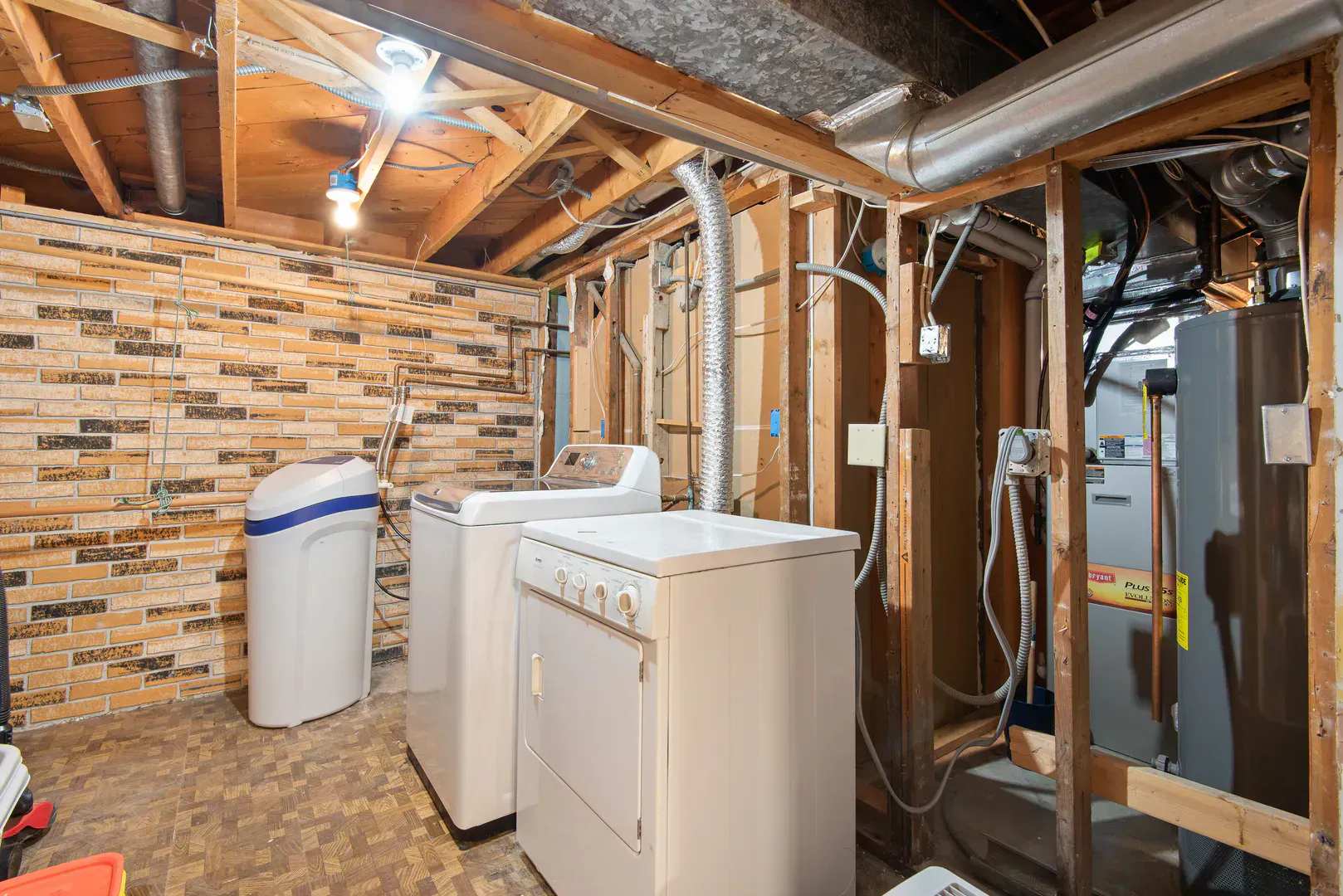
Finished basementSmart at the water heater and sump corner
One smart sensor where the gallons are, screamers everywhere else.
A mixed strategy covers both priorities.
One smart sensor at the water heater, the appliance with the biggest tank and the quietest failure.
Basic screamers at the laundry, the sinks, and the low spots.
You get away-from-home coverage where the gallons are, and cheap depth everywhere else.
The under-sink roundup
covers the cabinet-sized end of that plan.
04
Smart vs basic questions
Mined straight off the search results page.
Do water leak detectors work?
Both kinds work, and the same way: contacts on the bottom close a circuit when water bridges them. The difference is who finds out. A basic alarm tells the house, a smart one tells your phone. The common failure for both is a dead battery nobody tested, so the twice-a-year wet-finger test matters more than which camp you buy.
Are smart water leak detectors worth it?
They are worth it when nobody is home to hear a siren: workday-empty houses, frequent travelers, rentals, and second homes. In a house with someone around most of the day, a loud basic alarm covers the same risk for far less, and the money saved buys more sensors for more spots.
Do smart leak detectors work without WiFi?
Partially. During an internet outage most smart sensors still sound their local siren, but the phone alert does not go out until the connection returns. That is the honest catch with smart-only coverage in storm country: the night the power and WiFi blink is also a likely night for water in the basement.
Is a water leak detector required by code?
Building codes generally do not require leak detectors in single-family homes, though some landlords, condo associations, and insurers require or strongly encourage them in units over finished space. Check your lease or association rules, and ask your insurer whether a detection device earns a credit on the premium.
Ready to place them? Start where the hoses are:
the laundry room picks
cover the most common burst in the house, and the
leak detectors hub maps the rest of the spots.