The Best Water Leak Detectors for the Laundry Room
SystemLeak detectors
Job typeRoundup
BySam Whitlock
UpdatedJune 2026
Heads up: this page has affiliate links. As an Amazon Associate, Vent & Valve earns from qualifying
purchases at no extra cost to you. Full disclosure.
Plan the sensor and the alert pathA local alarm and a phone notification serve different needs. Check the exact kit contents, gateway requirements and placement instructions.
01
Placement before products
Three spots catch every laundry room failure.
Spot 1
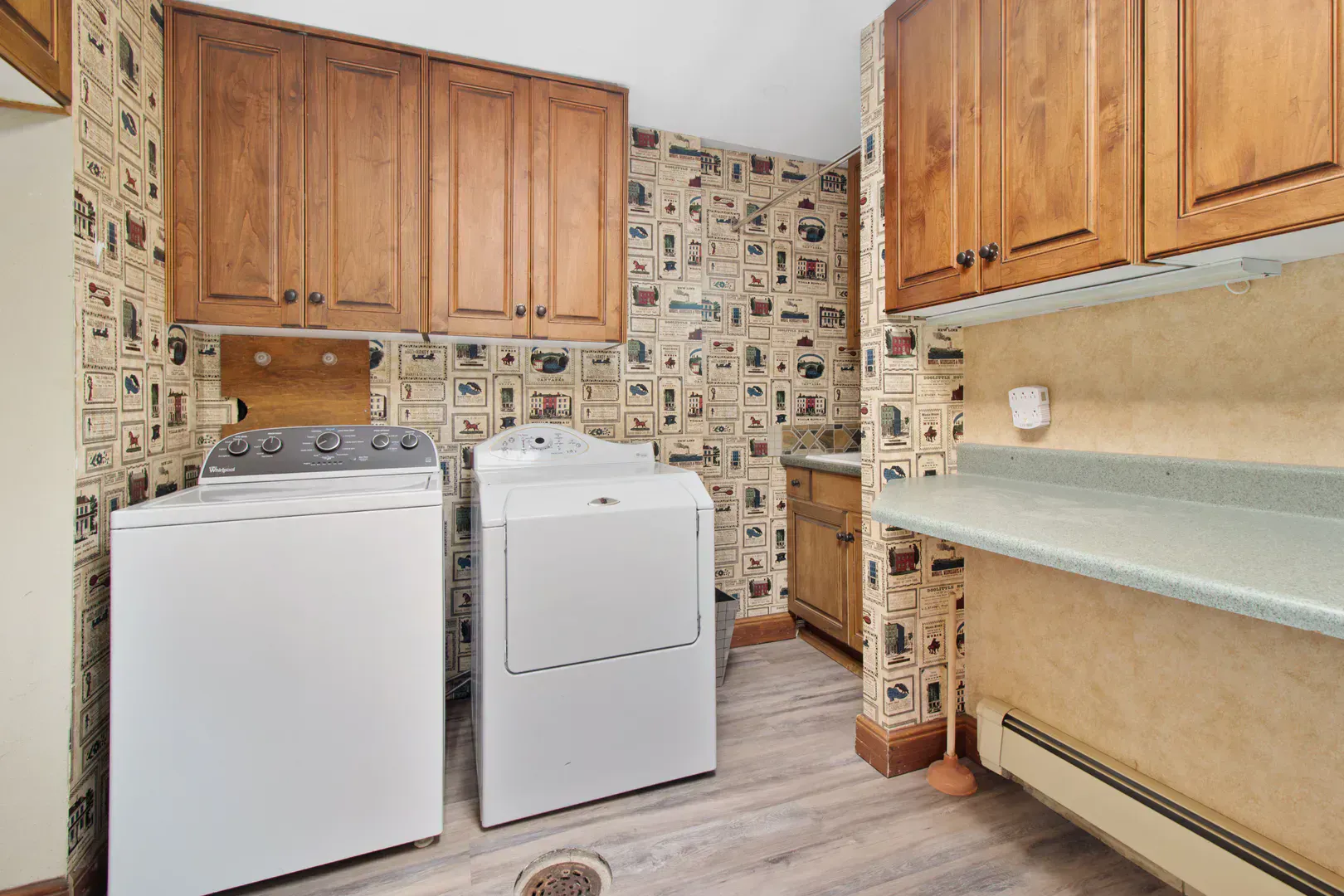
The drain pan
If your washer sits in a pan, the pan is the catch basin for slow failures.
That covers a weeping pump seal, a drip at the hose connection, and an overfill.
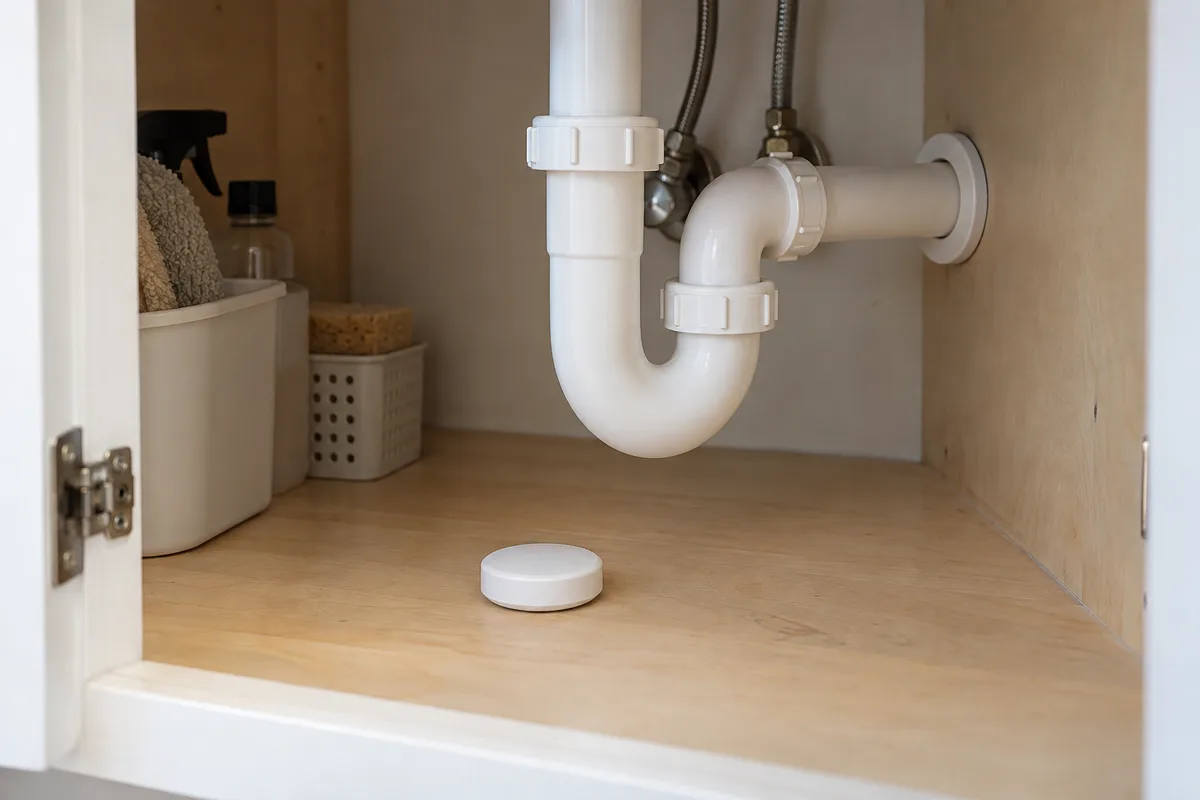
Place it: flat on the pan floor. A sensor there hears all of them.
Upstairs laundry rooms over finished ceilings should treat this spot as mandatory.
Spot 2
Behind the machine
A burst supply hose sprays at the wall and runs down it.
The water pools behind the washer before any shows out front.
Place it: slide a puck back there on the floor below the hose connections, or lay a sensing cable along the back edge where a spray cannot miss it.
Spot 3
Under the supply valves
The shutoff box is where hose threads, washers, and valve stems all meet.
Small drips start at threads.
Place it: directly below the valves. A sensor there catches the slow failure that takes weeks to show anywhere else.
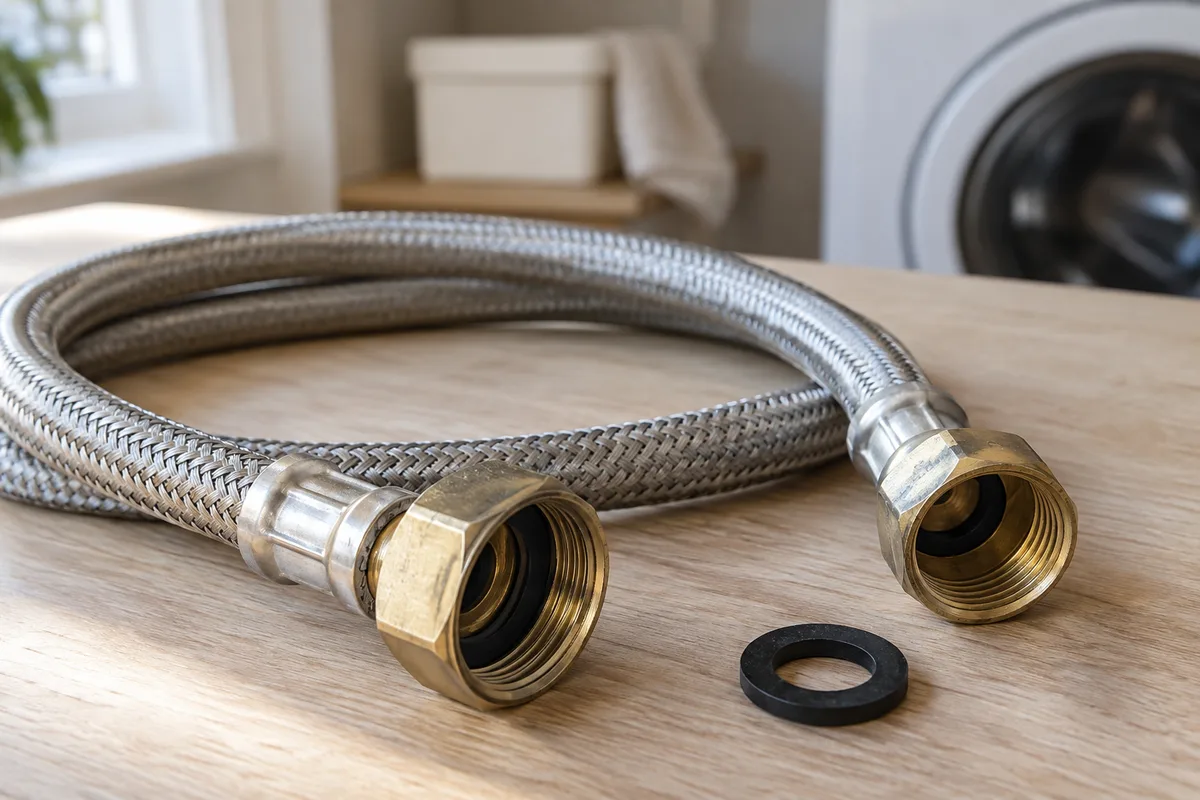
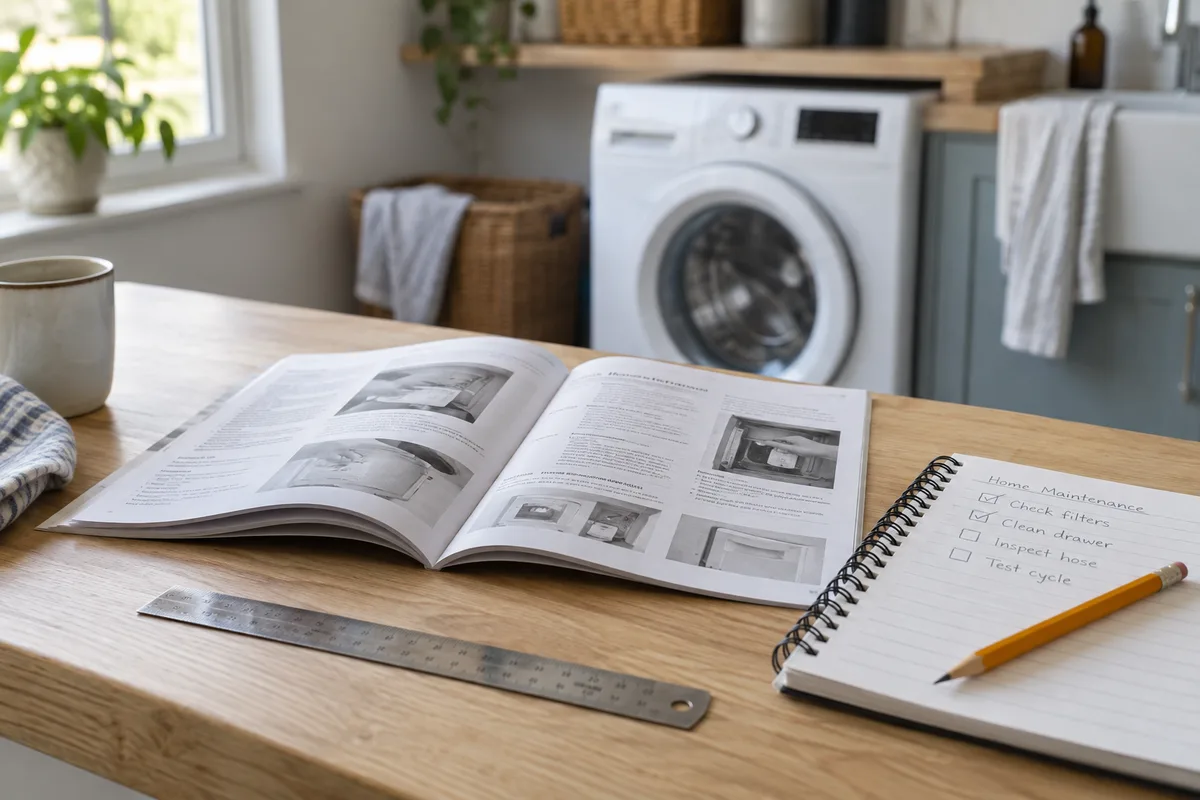
Check the hoses the same afternoon you place the sensors.
One more honest note: a detector is the warning, not the fix. The same afternoon you place sensors, check the date on your hoses.
Any pair past five years is due, braided included. Washer makers such as Whirlpool and GE Appliances give that interval.
Best for: covering all three laundry spots with phone alerts, no separate smart-home system required
Mid-range
Three sensors is exactly the laundry room count: pan, behind the machine, under the
valves. Each puck screams on its own at up to 100 decibels and also pings the app through
the small plug-in gateway, so you get the local siren when you are home and the phone alert
when you are not. Probes on the top face as well as the bottom mean a drip from a hose
above registers the same as a pool below. Owner reports run consistent on alert speed, with
the usual 2.4 GHz pairing fuss as the main complaint.
Skip it if: your laundry closet has no outlet within reach for the plug-in gateway, or your router is locked to 5 GHz only.
02
First Alert WA100 Water Alarm
Best for: the someone-is-usually-home house that wants a loud, simple screamer
Budget
This is the smoke-alarm company doing the smoke-alarm thing to water. One battery, two
contacts, an 85 decibel tone you will hear over a running dryer. There is nothing to
configure and nothing to update, which is exactly why it keeps working years after fancier
gear has lost its WiFi password. Drop one in the drain pan, test it on clock-change
weekends, and replace the battery when it chirps.
Skip it if: the house sits empty during the workday. A siren nobody hears is a flood with a soundtrack.
03
Zircon Leak Alert Water Detector
Best for: the spot behind the washer, a slim puck that survives being forgotten
Budget
Treat the Zircon as floor hardware: wedge it behind the machine under the
supply valves and let it sit for years on one 9V battery. The pulsing 90 decibel tone cuts
through laundry noise, and the flat-or-on-edge design keeps the contacts against the floor
even in tight clearance behind a washer. It is the cheap second sensor that makes the
placement plan complete.
Skip it if: you want any kind of remote alert. This one only talks to people in the house.
04
YoLink Water Leak Starter Kit (Hub + 4 Sensors)
Best for: covering the laundry room plus the water heater and sinks in one system
Mid-range
YoLink solves the problem WiFi sensors hit in real houses: the laundry corner of the
basement where the router signal dies. The sensors talk LoRa, a long-range low-power radio,
to one hub, so a sensor behind a steel washer two floors down still reports. Four sensors
covers laundry, water heater, and two sinks out of the box. Know the trade going in: the
standard sensors are silent on purpose, so this kit is for phone-first households.
Skip it if: you want a siren at the sensor. These pucks alert your phone, not the hallway, unless you add YoLink's alarm hardware.
05
Moen Flo Smart Water Leak Detector
Best for: the laundry room that also gets cold, a sensor that reads temperature and humidity too
Premium
The Moen earns the premium badge with the sensing cable option and the climate readings.
The cable snakes along the back edge behind a washer and turns its whole length into the
detector, which is the right tool for a spray that could land anywhere along the wall. The
temperature alerts matter in garage and mudroom laundry setups where a January cold snap
threatens the pipes before any leak does. It connects straight to WiFi, no hub purchase.
The pan, the wall side, and the valve drip zone are separate puddles for the first critical minutes.
That is why the multi-packs rank high here.
Power
Pick a battery story you believe
A 9V screamer that runs for years beats a rechargeable you were supposed to top up in March.
Test ritual: the same whatever you buy. Wet finger across the contacts twice a year.
Shutoff
Know that shutoff exists
Auto-shutoff valves that close the line when a sensor trips are real, and they work.
Second homes should consider them.
For a primary residence, sensors plus fresh braided hoses cover the same risk for far less plumbing.
04
How we picked
Specs, manuals, and documented owner patterns.
Rankings start from manufacturer specs and manuals.
We rank on manufacturer specs, manuals, and consistent patterns in long-term owner reports:
Alert loudness.
Battery claims checked against the battery type.
How each unit behaves when WiFi drops.
We do not do staged flood theater, and we say so plainly. The full method is on our how we pick gear page.
05
Laundry room leak questions
Mined straight off the search results page.
Where should you install a water leak detector in a laundry room?
Three spots, in order: in the drain pan under the washer, on the floor behind the machine below the supply valves, and at the room's low point if the floor slopes. Water from a burst hose sprays at the wall first and pools at the lowest spot, so the sensor belongs where water ends up, not where it is easy to see.
How do you use a water leak detector?
Basic alarms are set-and-forget: drop in the battery, set the unit contacts-down on the floor, and touch a wet finger across the contacts once to confirm it screams. WiFi models add an app pairing step on a 2.4 GHz network. Either way, test twice a year when you change clocks, the same habit as smoke alarms.
Are water leak sensors worth it for a washing machine?
Yes, and the laundry room is the strongest case in the house. Washer supply hoses carry full pressure around the clock and fail with age, and a burst can move hundreds of gallons in an hour. A sensor that costs less than a load of new towels turns that event from a flooded floor into a wet corner.
Do water leak detectors work if the leak is behind the machine?
They do if you put one back there. The sensor detects water that reaches its contacts, so a puck sitting in front of the washer can miss a spray that runs down the wall behind it. Slide one sensor behind the machine under the valves, or use a model with a sensing cable laid along the back edge.
What is a water alarm?
It is the smoke detector idea applied to water: two metal contacts on the bottom of a battery-powered puck. Water bridges the contacts, the circuit closes, and a siren in the 85 to 100 decibel range goes off. No app, no hub, no subscription. Smart versions add a radio so the same event also reaches your phone.
Still weighing the two camps? The
smart vs basic breakdown
settles it by who is home when. And for the rest of the sensor placements around the
house, the leak detectors hub has the map.