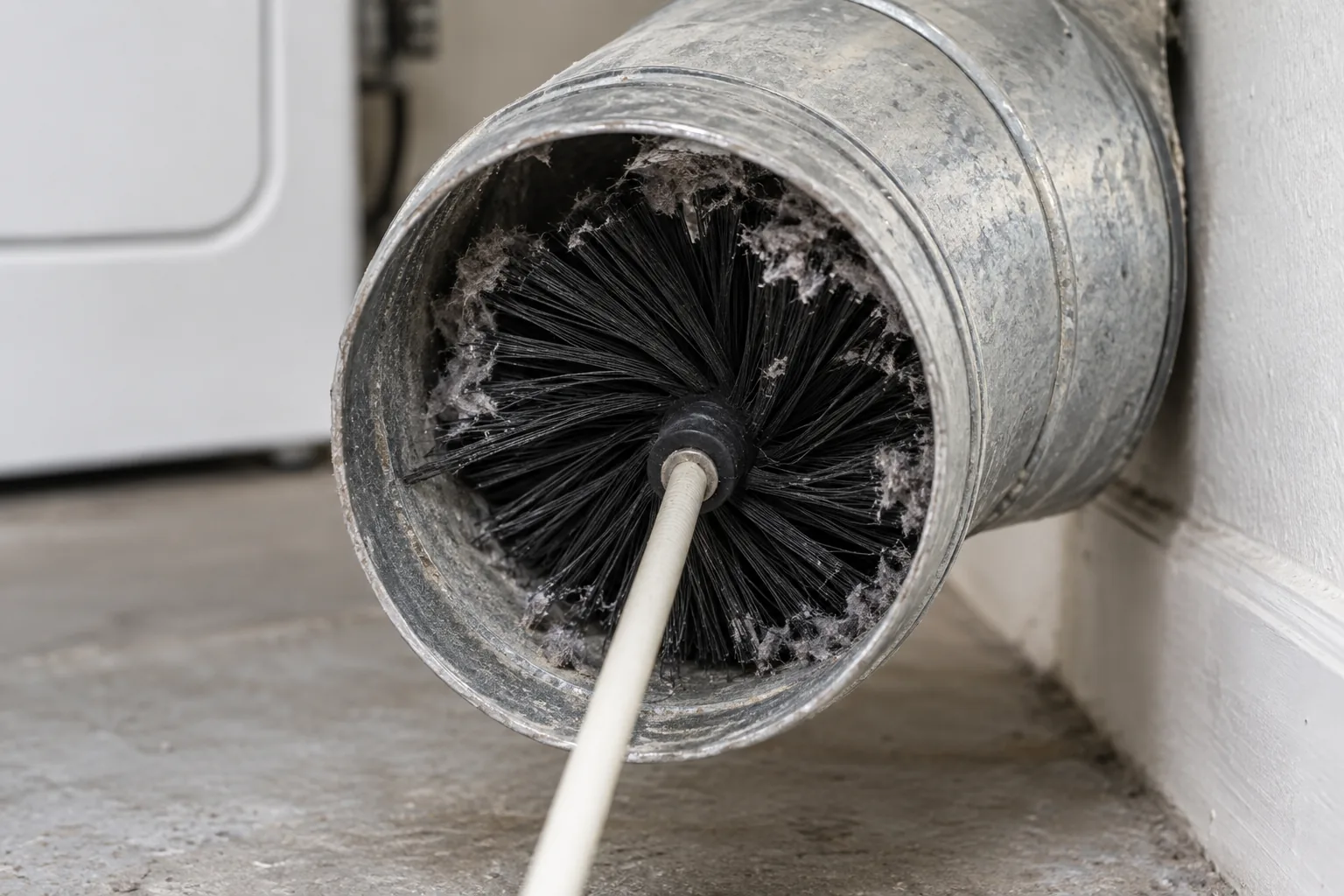
Stop the dryer and the drill. Do not run the dryer with a brush or rod left in the vent.
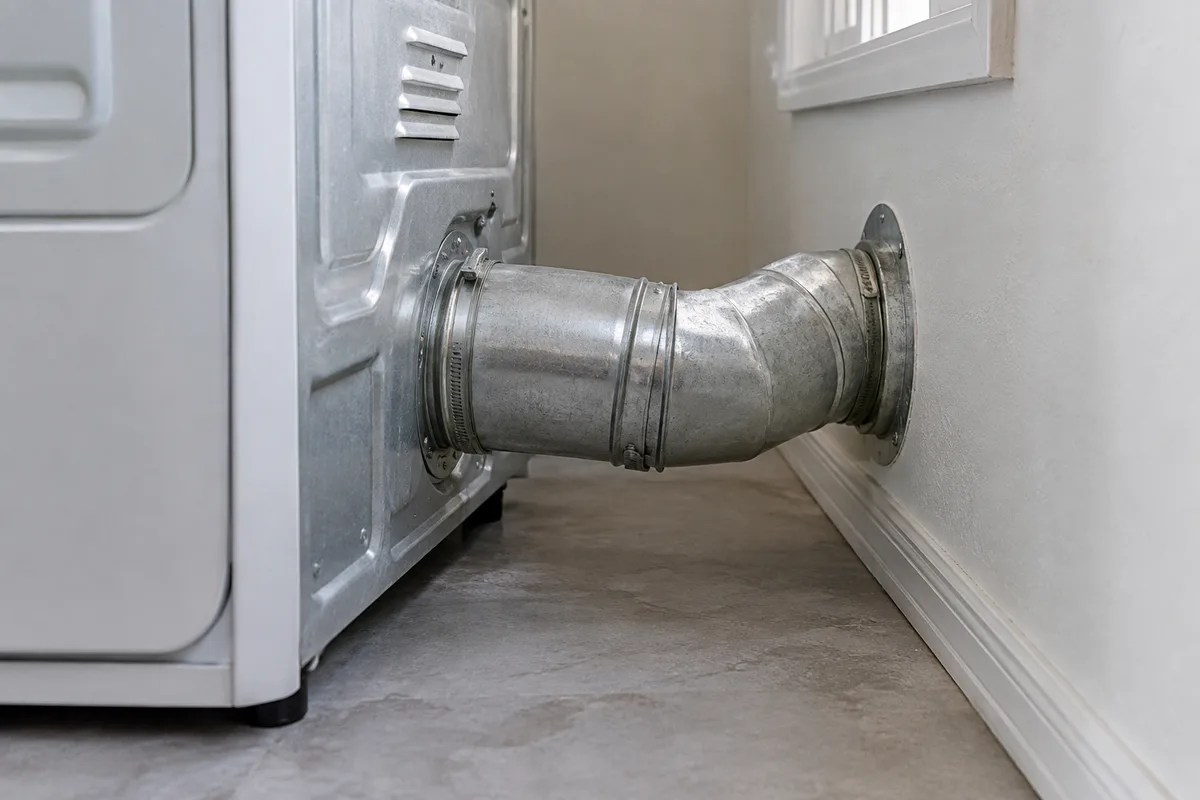
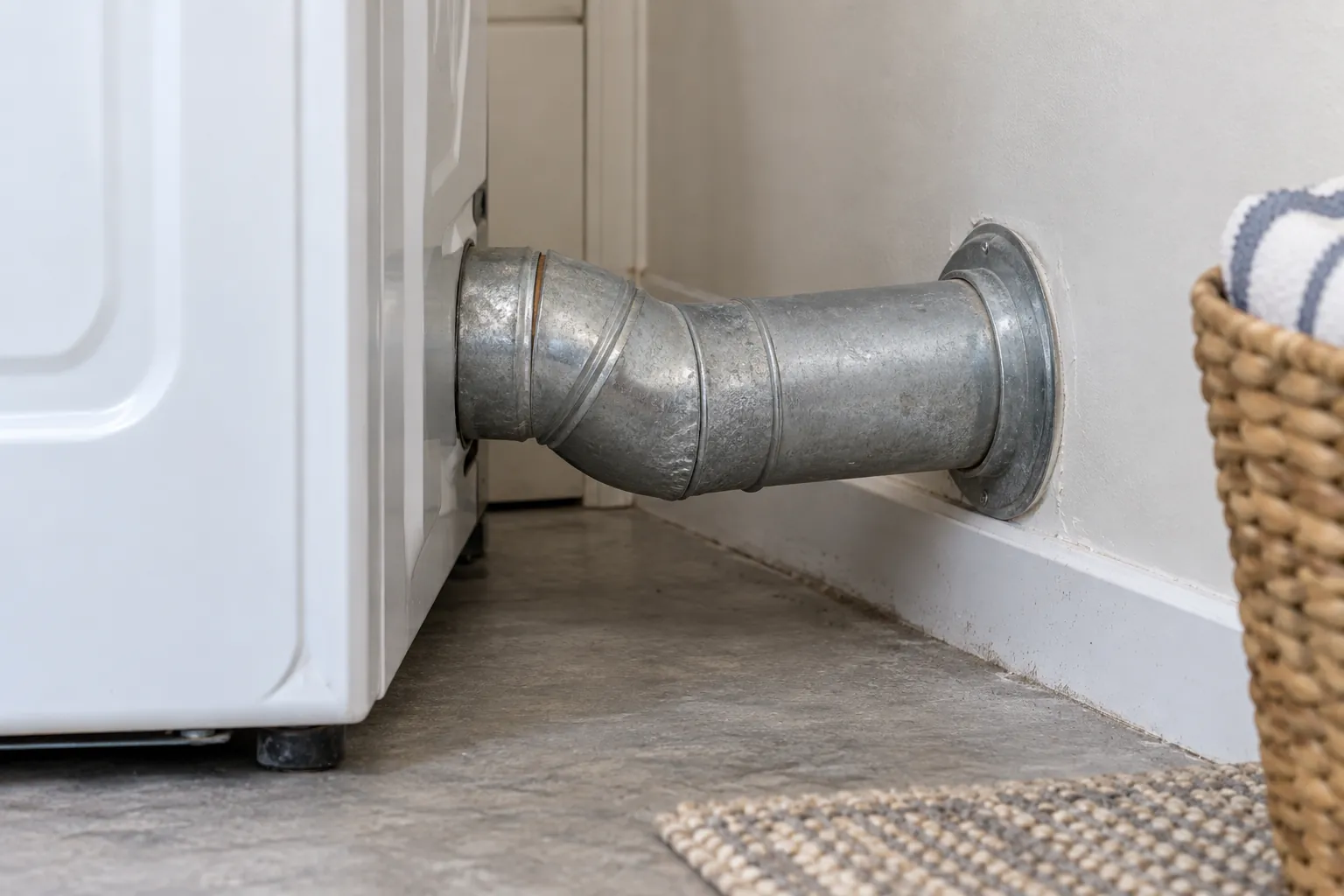
Follow the appliance manual to disconnect power before accessing the duct. Do not pull the dryer if that would strain a gas connection.
If the tool will not move without force, its location is unknown, or the duct is damaged or concealed, stop and call a qualified dryer-vent service.
01
Jammed, detached, or not sure?
Use what you can see without moving the tool again.
A brush may wedge at a bend or damaged section, bind in packed lint, or separate from a threaded rod.
Resistance alone does not identify the cause, and a visible rod does not prove every hidden joint is connected.
Note how much rod entered the duct without feeding in more.
Match the situation to the next safe step
What you observe
Next step
Avoid
A rod is still at the opening, but the tool will not move.
Stop. Find the exact kit's recovery instructions. Treat hidden connections as unconfirmed.
More torque, repeated tugging, or reversing the drill.
The rod came out without the expected brush or a rod section.
Set the recovered parts aside. Ask the kit maker about its retrieval method or arrange professional retrieval.
Spinning a rod to reconnect a joint you cannot see.
The location is unknown, the duct is damaged, or access is concealed or at roof height.
Keep the dryer off and contact a qualified vent service.
Blind hooks, a second brush, opening walls, or climbing onto the roof.
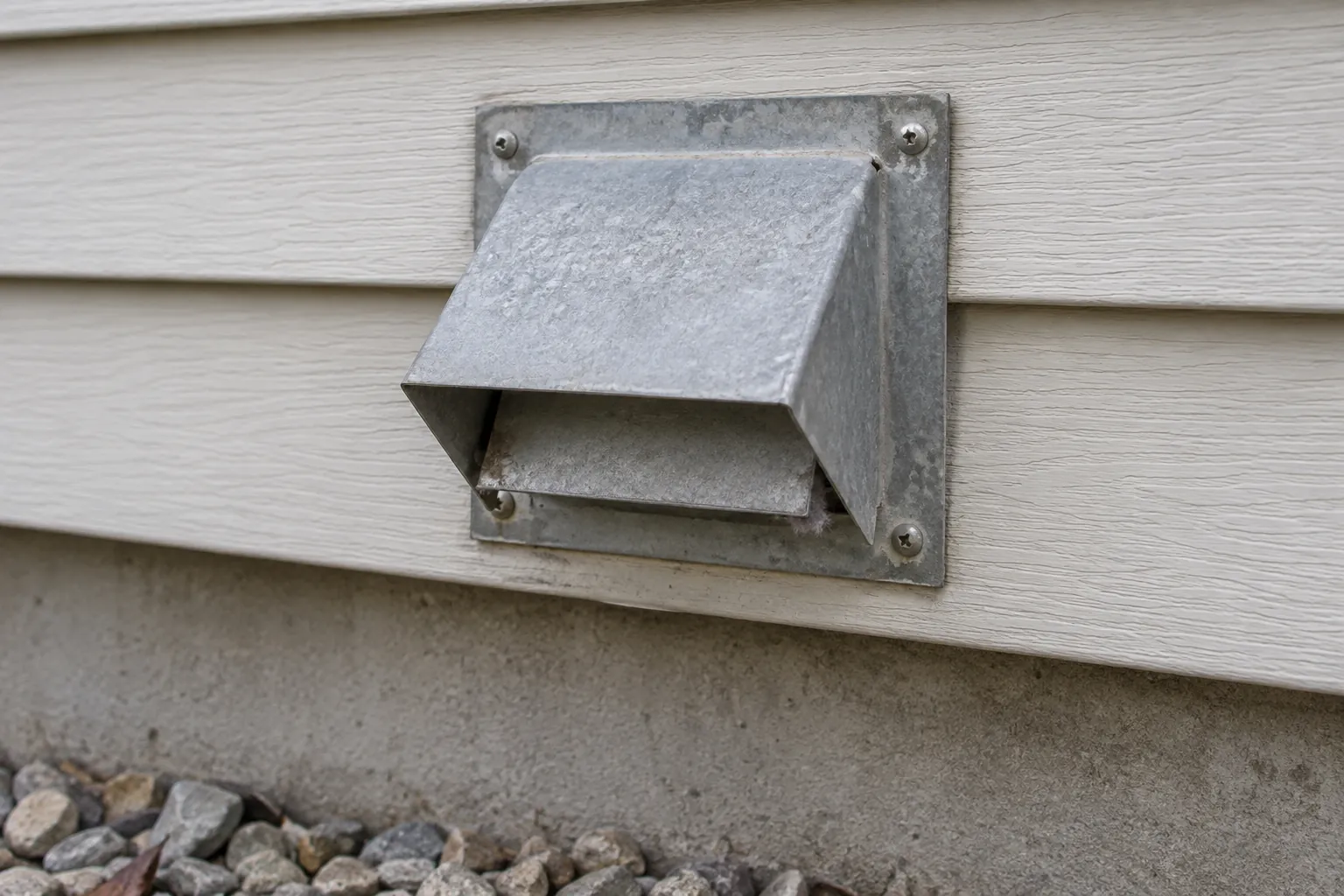
Locate the obstruction before retrievalA trapped brush can be at a joint or beyond an inaccessible turn. Keep the dryer off and stop if removal would require force, hidden-duct access or roof work.
02
Check the recovery method for your kit
Stop when a step would need force or unsafe access.
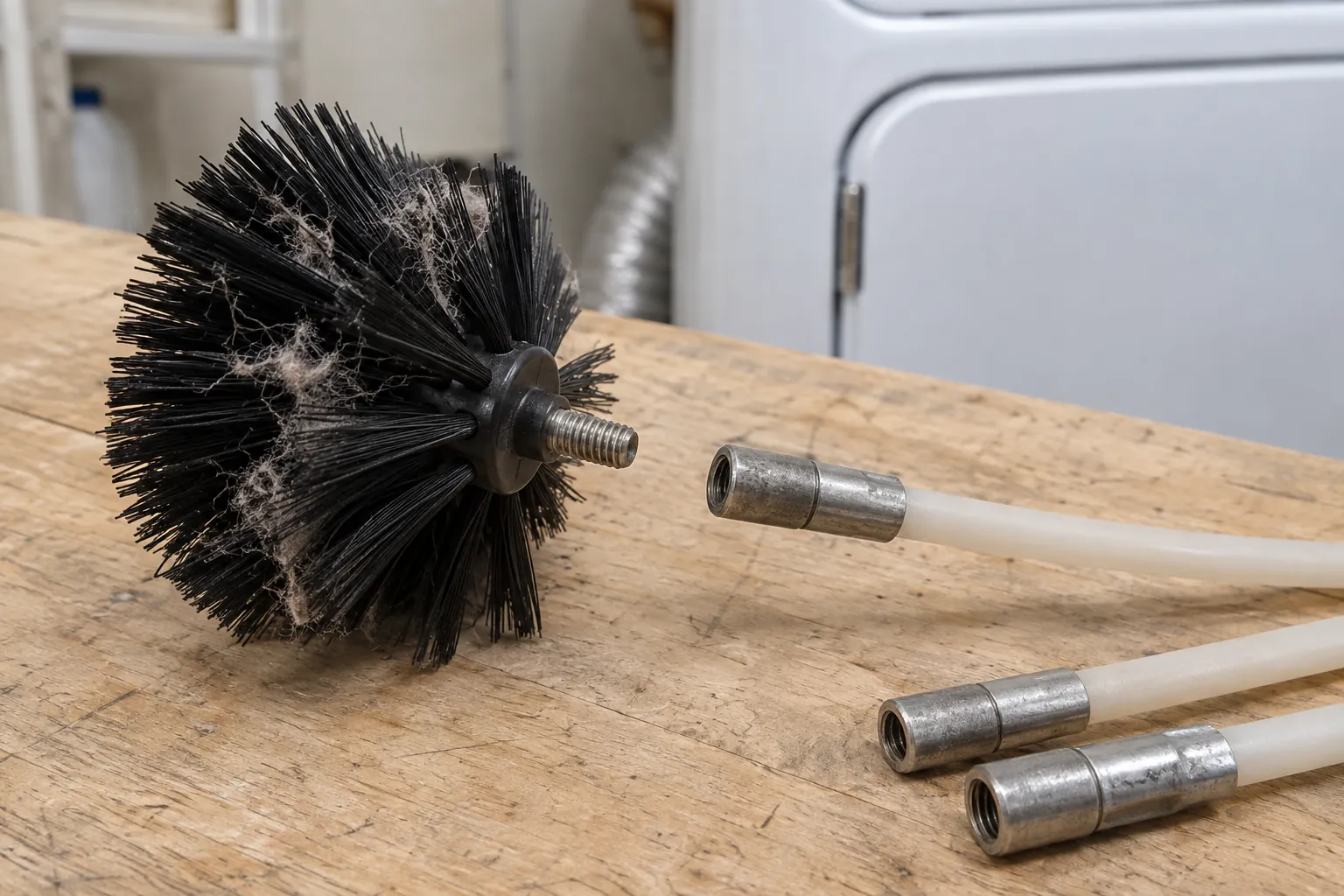
Keep track of the brush and every rod section.
Stop and identify the kit. Release the drill trigger and disconnect the drill from the rod.
Read the exact kit's jam or retrieval instructions before moving the tool again. Do not reverse a threaded rod assembly
or try to reconnect a hidden joint by spinning it.
Check only safely accessible openings. With the appliance isolated as its manual directs,
inspect accessible duct ends from a safe position. Do not insert a second rod to push against the stuck head,
improvise a fish-tape hook, or climb to a roof termination to retrieve it.
Use the manufacturer's recovery guidance. The
RLE202 operator manual, printed page 21
describes its dedicated retrieval tool for disconnected components and specifies hand use without a drill.
That instruction applies to that system. For another kit, ask its manufacturer; do not substitute an improvised tool.
Escalate an unresolved or hidden obstruction. A qualified vent service can locate a detached brush,
assess damage and determine whether duct access is needed. Stop if retrieval would require force, opening concealed duct,
disturbing a gas connection or working at height. See the roof-vent access guide.
03
What to tell a dryer-vent service
Ask for stuck-tool retrieval when booking.
Contact a qualified company that handles dryer exhaust systems. Confirm that it can assess a stranded tool
and the access your installation needs. Do not assume every cleaning appointment includes retrieval or repair.
Note which parts of the duct are safely accessible.
The missing parts: kit brand and model, brush type, and how many rod sections went in and came back out.
The access: wall or roof outlet, any known concealed sections, and whether moving the dryer would affect a gas connection.
What happened: when the tool stopped moving, whether a joint separated, and any force or reverse rotation already tried.
The quoted work: how the obstruction will be located, what retrieval and inspection cover, and whether cleaning or duct repair costs extra.
04
Before using the dryer again
A recovered brush is only part of the check.
The outside outlet is only one part of the vent path.
Account for the brush and every rod section that entered the vent.
Resolve the remaining blockage and have damaged or separated duct repaired.
Restore the exhaust connections according to the appliance and duct instructions.
If the tool's location, duct condition or completeness of the recovery is uncertain, keep the dryer off and have the system checked.
For a roof outlet or inaccessible run, use the roof-vent access guide
to plan qualified help. Visible airflow at one opening does not account for a missing component or establish the condition of hidden duct.
05
Reduce the risk next time
Prevention starts after the obstruction is resolved.
Use the exact kit instructions after recovery
The RLE202 operator manual
requires clockwise rotation and warns against forcing or over-torquing rods.
Its assembly and drill settings are specific to that kit.
Do not assume tape makes a joint impossible to disconnect.
Replacing damaged rods or a kit that fell short of the outlet? The long-vent cleaning kit guide compares reach, rod material and joints.
Inspect the route before the next cleaning
Damage, bends and an obstructed termination need assessment.
Correct the installation to the appliance instructions instead of modifying a hood blindly.
Once the immediate problem is resolved, the dryer vents hub covers maintenance planning.
06
Stuck brush questions
Asked by people standing in front of a half-cleaned vent.
How do you use a dryer vent cleaning brush with a drill?
Use only a drill-compatible kit and its exact operating instructions. The Gardus RLE202 manual specifies clockwise rotation and warns against forcing or over-torquing rods. That is not a universal powered-recovery instruction for a jammed brush.
Can you clean a dryer vent with a shop vac?
A vacuum can collect loose lint with the kit's approved adapter. Do not rely on suction to retrieve a stuck brush or prove the full duct is clear. A detached tool or unresolved obstruction needs inspection before the dryer runs again.
How long is a typical dryer vent?
There is no single length limit for every dryer. Use the appliance installation manual and its vent-system chart, including turns and the termination. For retrieval, the actual route and safe access matter more than an assumed maximum.
Who can get a stuck brush out if I cannot?
Contact a qualified dryer-vent service and ask specifically about stuck-tool retrieval. Explain whether the brush or a rod section is missing and whether the duct is concealed or exits through the roof. Confirm inspection, retrieval, any duct repair, and cleaning in the quoted scope; a routine cleaning appointment may not include them.