First
Gravity
- The exhaust has to carry lint upward, sometimes two stories, before it exits.
- PNNL's dryer-venting guide lists upward angles and excess length among the duct features that reduce airflow and contribute to lint buildup.
Heads up: this page has affiliate links. As an Amazon Associate, Vent & Valve earns from qualifying purchases at no extra cost to you. Full disclosure.

The short answer
Start with a safe-access assessment. A long rod kit does not make every roof-terminated duct suitable for DIY cleaning. Follow the exact dryer and kit instructions, and arrange qualified service when the cap, obstruction or duct cannot be reached safely. Keep the dryer off until the exhaust path is clear, intact and reconnected.
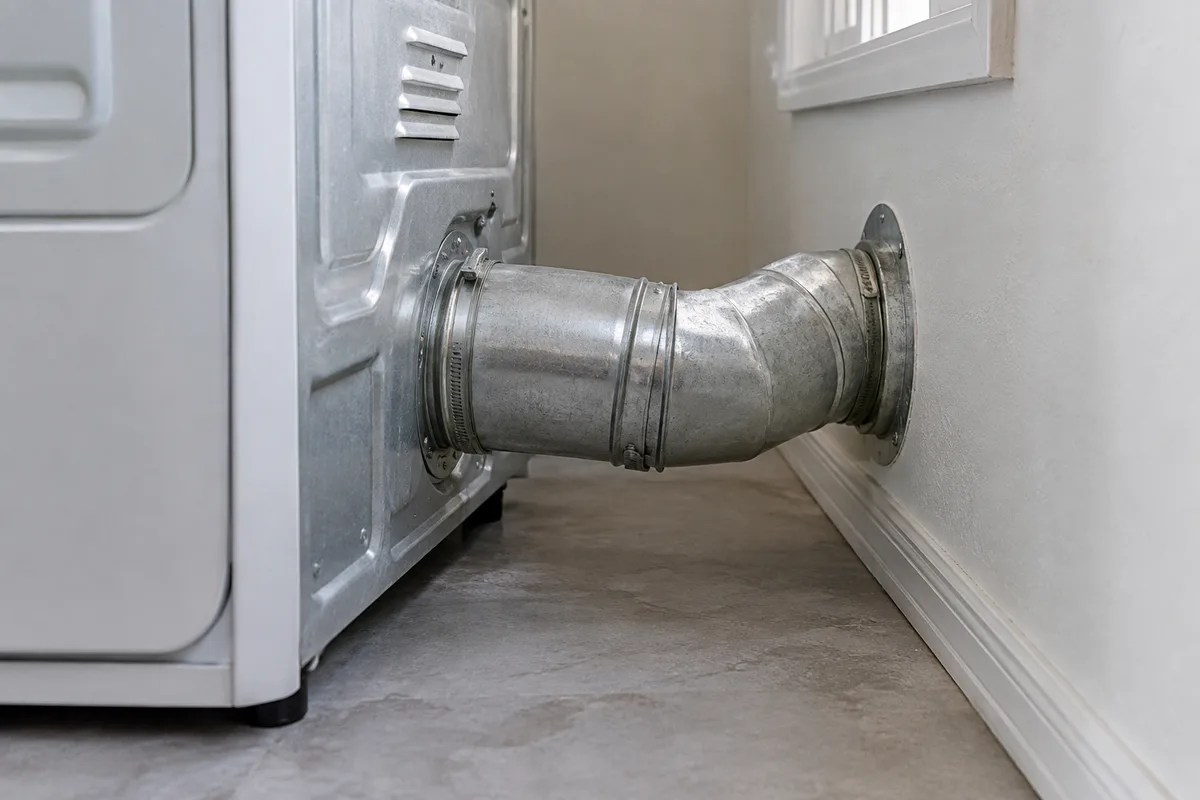
Gravity, condensation, and the wrong cap.
Three things gang up on a vertical run.
First
Second
A wet vent is a reason to have the run inspected.
Third
More on the fix below.
The floor is undefeated. Work from it.

Arrange qualified access to the termination.
Tell the service provider that the dryer terminates through the roof. Ask how they will inspect the cap, clear the exhaust path and check the connections before returning it to use.
Have a damaged or unsuitable termination assessed against the appliance and cap manufacturer's instructions. Buying a replacement does not resolve the access problem. Fitting a roof cap is roofing work: InOvate's DryerJack 486 instructions involve cutting through the roof and sealing flashing under the shingles, and list a roof-pitch range of 3/12 to 12/12.
Screens belong on plumbing vents, not dryer exhaust.
The problem
The fix
If a roof run keeps clogging: ask the vent service to check the cap for a screen or a stuck damper before blaming your laundry habits.
Some of these runs are simply pro jobs.
No shame in this list.
Schedule later visits by your dryer's instructions and the run's condition, not a fixed calendar interval.
Roof runs hide their symptoms until they cannot.
A roof vent does not change the rule in our cleaning frequency guide: there is no universal interval. Follow your dryer's maintenance instructions and add a quick fall inspection before the heavy laundry season. The rest of the cluster lives on the dryer vents hub.
Wet ducts, max lengths, and what belongs on the cap.
Not if a wall route exists. PNNL's Department of Energy guidance says to avoid terminating the duct at the roof, and it lists upward angles among the duct features that reduce airflow and contribute to lint buildup. The model code allows a roof exit that meets the dryer maker's instructions, and it is sometimes the only route from an interior laundry. Condensation can drain back down the rising duct, and reaching the cap means roof work. If you are remodeling and have a choice, choose the wall.
Condensation. Warm, moist exhaust hits a cold duct and the water falls out of the air. On a roof run it can drain straight back down toward the dryer. PNNL recommends insulating ducts that pass through unconditioned spaces, especially in cold climates, and running ducts horizontally with a slight downward slope where possible. Standing water or wet lint in the duct calls for an inspection before further use.
The 2024 International Residential Code sets 35 feet for the exhaust duct, not counting the transition duct, and reduces that allowance for each fitting. A 4-inch-radius mitered 90-degree elbow counts as 5 feet and a 45-degree one as 2.5 feet; smoother long-radius elbows count for less. The code also accepts the maximum length in the dryer manufacturer's installation instructions, so check your manual. A roof vent spends much of its allowance going up.
Run the dryer and walk the outside walls looking for a flapping hood. No wall hood means it goes up. From the attic you can usually spot the 4-inch duct rising to a roof penetration, and from the yard you may see a low metal cap on the roof, often with a curved or angled hood, rather than a standard pipe jack.
The cap is the fitting that ends the duct at the roof: a hood or cowl that sheds rain while letting exhaust escape. On a dryer line it must not have a screen. The International Residential Code prohibits screens at a dryer duct termination and requires a backdraft damper. Mesh used on other vent caps becomes a lint mat on a dryer, so dryer-rated caps use a damper instead.
Compare the gear or work through the next step.
Roundup The Best Dryer Vent Cleaning Kits for Long Vents Roundup The Best Dryer Vent Hoses for Tight Spaces
 Roundup The Best Vacuum Attachments for Dryer Lint
Put it on the seasonal maintenance checklist or browse all guides.