Are Indoor Dryer Vent Lint Traps Safe or Worth It?
SystemDryer vents
Job typeExplainer
BySam Whitlock
UpdatedSeptember 2026
Heads up: this page has affiliate links. As an Amazon Associate, Vent & Valve earns from qualifying
purchases at no extra cost to you. Full disclosure.
The short answer
Only on an electric dryer, and only as a last resort. Never vent a gas dryer indoors: its
exhaust can carry carbon monoxide. On an electric dryer, an indoor lint trap catches lint,
but the water from each load, about a gallon for a typical one, stays in the room. The
model code requires dryer exhaust to go outdoors unless the dryer is a listed ventless
model, so use a trap only when no outdoor route exists and your dryer's installation
instructions, local code and lease or HOA allow it. Vent outside if you possibly can.
The exhaust destination mattersAn indoor lint collector is not the same thing as an outdoor exhaust termination. Check the appliance instructions before considering any change to the exhaust path.
01
How the kits actually work
Two designs, one shared limitation.
The common style
Water-trap box
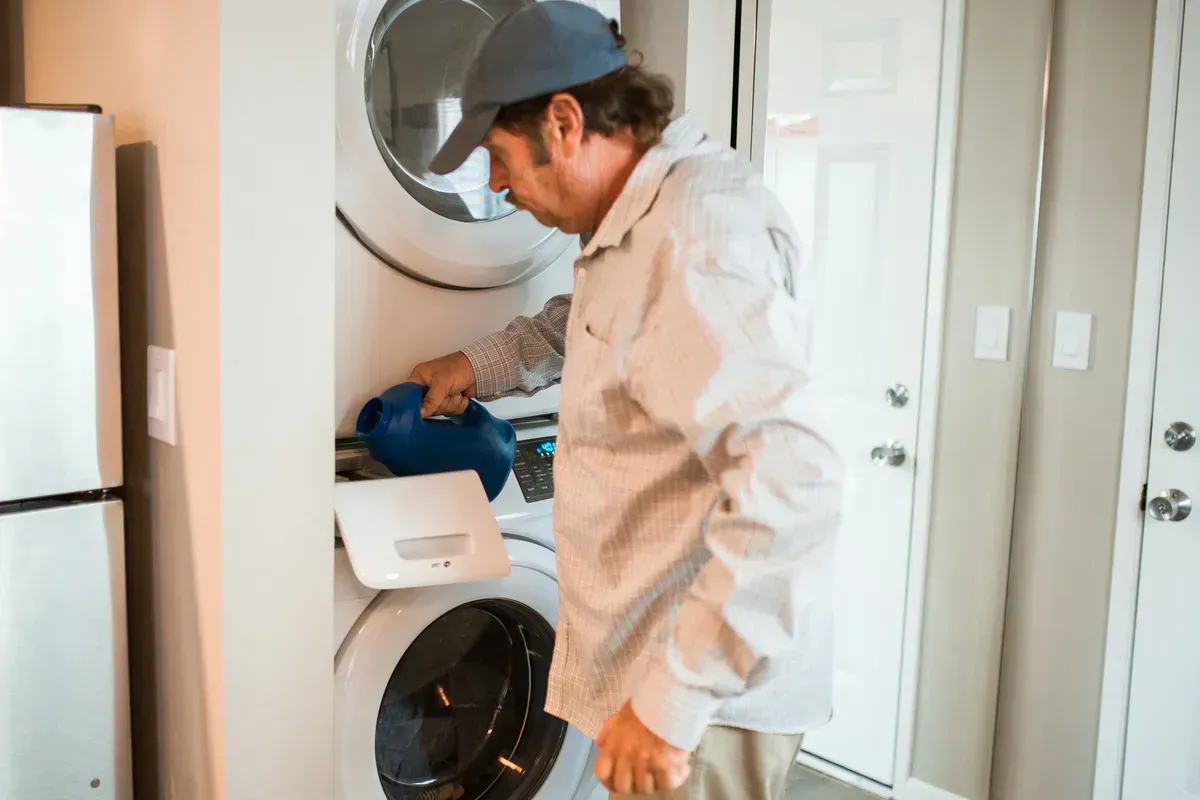
The 4-inch transition duct threads into the reservoir lid, and you fill the reservoir with water to the fill line.
The exhaust blows across the water on its way into the room.
The BetterVent design pushes the exhaust through a screen and a polyester filter pad instead of water.
Its maker, ADR, says the polyester filter stops fine lint dust. There is no water to spill.
Upkeep:ADR's installation brochure (PDF) says to clean the screen every 3 to 5 loads. Its FAQ says to vacuum or replace the filter as lint loads it; a flap you calibrate at install opens if you wait too long.
The BetterVent is the
filter-style kit in this
comparison. Neither design removes water from the exhaust.
Both designs
One shared limitation
PNNL's dryer-venting guide for the Department of Energy says a dryer vents about a gallon of water for a typical load.
With an indoor kit, that water goes into the room as vapor.
No lint trap removes that humidity. The same guide advises against devices that remove lint and return dryer exhaust to the home, because they add moisture.
02
Gas dryers: never, and not negotiable
This is a carbon monoxide rule, not a preference.
Both kit makers on this page draw the same line.
Dundas Jafine says
its indoor kit should not be used with gas dryers, and
ADR says never to vent a
gas dryer anywhere but outside. The model code requires gas dryer exhaust to carry moisture and
combustion products outside the building
(IRC G2439.1).
If your dryer has a gas line behind it and no working exterior vent, the machine should sit
idle until the duct is fixed.
03
Electric dryers: legal sometimes, smart rarely
Code says one thing, your drywall says another.
Code
What the code says
The International Residential Code requires dryer exhaust to carry moisture outdoors (M1502.2) and the duct to end outside the building (M1502.3). Many local codes adopt it, sometimes with amendments.
Its one exception is a listed and labeled condensing (ductless) dryer. An add-on lint kit is not that, and ADR tells BetterVent buyers to check code approval with their local authority.
Check first: read your dryer's installation instructions. Speed Queen's (PDF, p. 10), for example, say the dryer must be exhausted to the outdoors. Then call your building department rather than guessing. In a condo the HOA gets a vote too.
Legal is the low bar
What the moisture does
About a gallon of vapor per typical load condenses on the coldest surfaces in a small room: window glass, exterior walls, the back of the cabinet.
EPA treats condensation on windows and walls as a sign of high humidity and says to vent clothes dryers outside where possible.
Repeated condensation is the moisture mold needs. Over a winter it can also show up as peeling paint and swollen trim.
04
The narrow case where they earn their keep
Renters and interior closets, with eyes open.
Interior closets are the narrow case where a kit gets considered.
Here is the honest use case.
You rent, and the landlord will not cut a wall penetration.
The dryer is electric.
The laundry sits in an interior closet with no exterior wall within reach.
Your dryer's installation instructions, the building department and the lease do not rule it out.
In that case a kit is better than a disconnected
foil hose blowing lint into
the room. It does nothing about the water.
Make it work like this
Kit mounted where you can reach it, as its maker directs.
Water trap emptied and refilled after each use; a filter box's screen cleaned every 3 to 5 loads.
A window open or a fan running while the dryer runs, as ADR suggests.
Hygrometer on the shelf.
In a dry, heated home the added humidity may stay in range. Let the meter decide.
If the meter holds above 50 percent between loads, the top of EPA's ideal range, or a window starts sweating, stop using the kit.
05
Better fixes to try first
Most "no vent possible" rooms have a vent option.
Awkward is not the same as unventable.
A room that seems unventable may only be awkward.
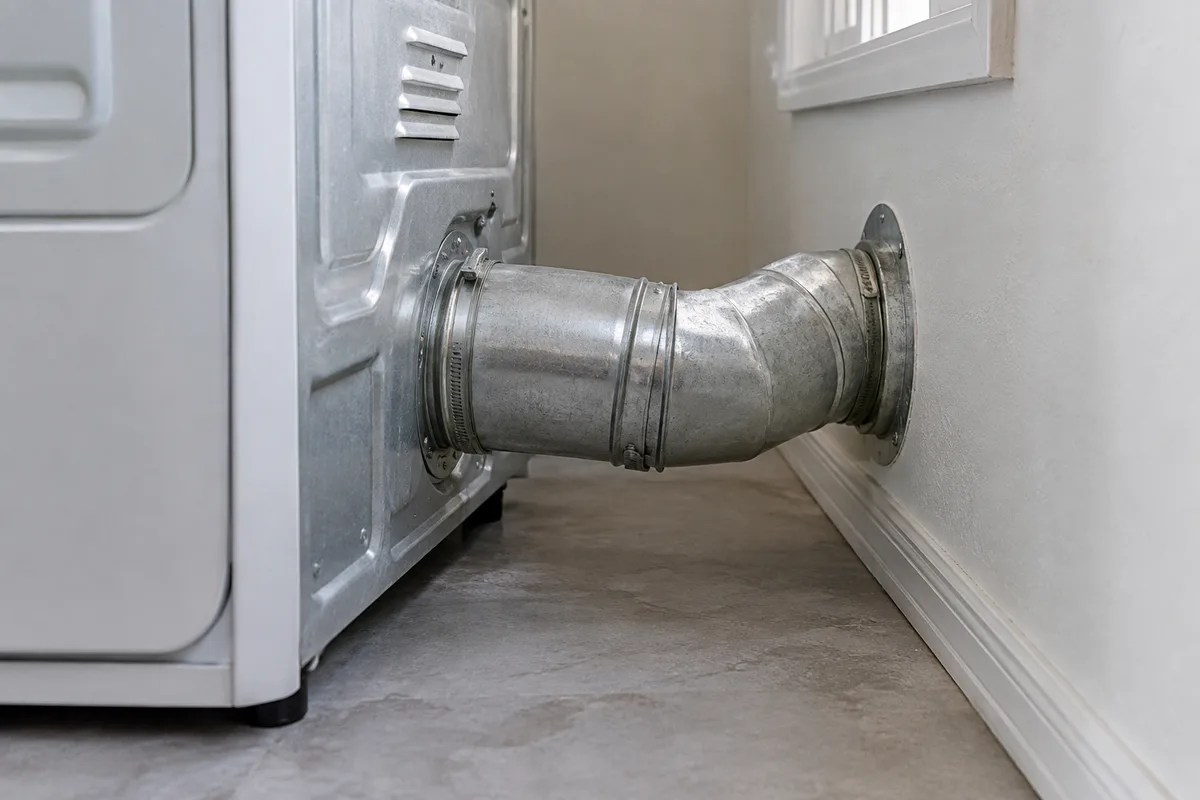
A dryer sitting two inches off the wall may take a periscope duct or a low-profile elbow, and our
tight-spaces hose roundup
covers that hardware and its fit limits.
A basement laundry may be able to vent out through the rim joist.
A garage laundry may be able to vent through an exterior wall or the gable.
If no outdoor route exists, a listed ventless (condensing) dryer is the no-duct option the model code exempts from outdoor exhaust. PNNL's guide pairs it with a condensate drain.
06
Signs the indoor vent is losing
The room will tell you before the drywall does.
Watch for these
Condensation on windows or cold exterior walls during and after loads
Hygrometer holding above 50 percent humidity between loads
A musty smell in the laundry area that airing out does not clear
Lint film settling on shelves and the top of the machine
Paint bubbling, trim swelling, or dark spots at ceiling corners
Any one of these means the room is absorbing what the duct should be carrying outside.
Then: stop using the kit and go back to the exterior and ventless options above.
For the rest of the cluster, head back to the dryer vents hub.
07
Indoor vent questions, answered
The safety and code questions people search most.
Are indoor dryer vents safe?
Never on a gas dryer. Its exhaust carries combustion products, which can include carbon monoxide, and both indoor-kit makers named here rule gas dryers out. On an electric dryer, the kits are sold for rooms where outdoor venting is not possible. Many dryer manuals still require outdoor exhaust, and PNNL's Department of Energy guidance advises against devices that return dryer exhaust to the home because they add moisture. Check your dryer's installation instructions first, and watch room humidity if you use one.
Are indoor dryer vents legal and up to code?
It depends on your jurisdiction, but the model code does not carve out indoor kits. The International Residential Code requires dryer exhaust to carry moisture outdoors and exempts only listed and labeled condensing (ductless) dryers. It also points to the dryer manufacturer's instructions, and many of those require outdoor exhaust. Local codes can amend the model text, so call your building department before installing one, and check your lease or condo rules.
Do indoor dryer vents work?
They are built to catch lint, and that is all they do. The water, about a gallon for a typical load by PNNL's estimate, goes into the room as vapor. They work as a lint filter. They do not work as a substitute for moving humid air out of the house.
Why do indoor dryer vents need water?
The water-trap style routes the exhaust across a reservoir so lint sticks to the water surface instead of drifting into the room. The water is the filter. Let it run low and the kit stops doing its job, which is why Dundas Jafine's instructions say to empty the reservoir and refill it to the fill line after each use. Filter-box designs such as the BetterVent use a polyester filter instead of water.
Can you vent a gas dryer indoors?
No. Gas dryer exhaust carries combustion products, which can include carbon monoxide, and an indoor kit would release them into your living space. The model code requires gas dryer exhaust to go outside the building, and both indoor-kit makers named here rule out gas dryers. If your gas dryer has no exterior duct, stop using it until one is installed.
Do indoor dryer vents cause moisture problems?
They can, and this is the dealbreaker for many homes. Every load adds water to the room air. In a small laundry closet that shows up as fogged windows, damp drywall and a musty smell. PNNL advises against devices that return dryer exhaust to the home for this reason. A hygrometer on the shelf tells you whether the room stays within EPA's ideal range of 30 to 50 percent relative humidity. If it does not, the kit has to go.