Heads up: this page has affiliate links. As an Amazon Associate, Vent & Valve earns from qualifying
purchases at no extra cost to you. Full disclosure.
Buy one of the multipacks below, hang one by the kitchen, put the spares at the grill and in
the garage, and keep an
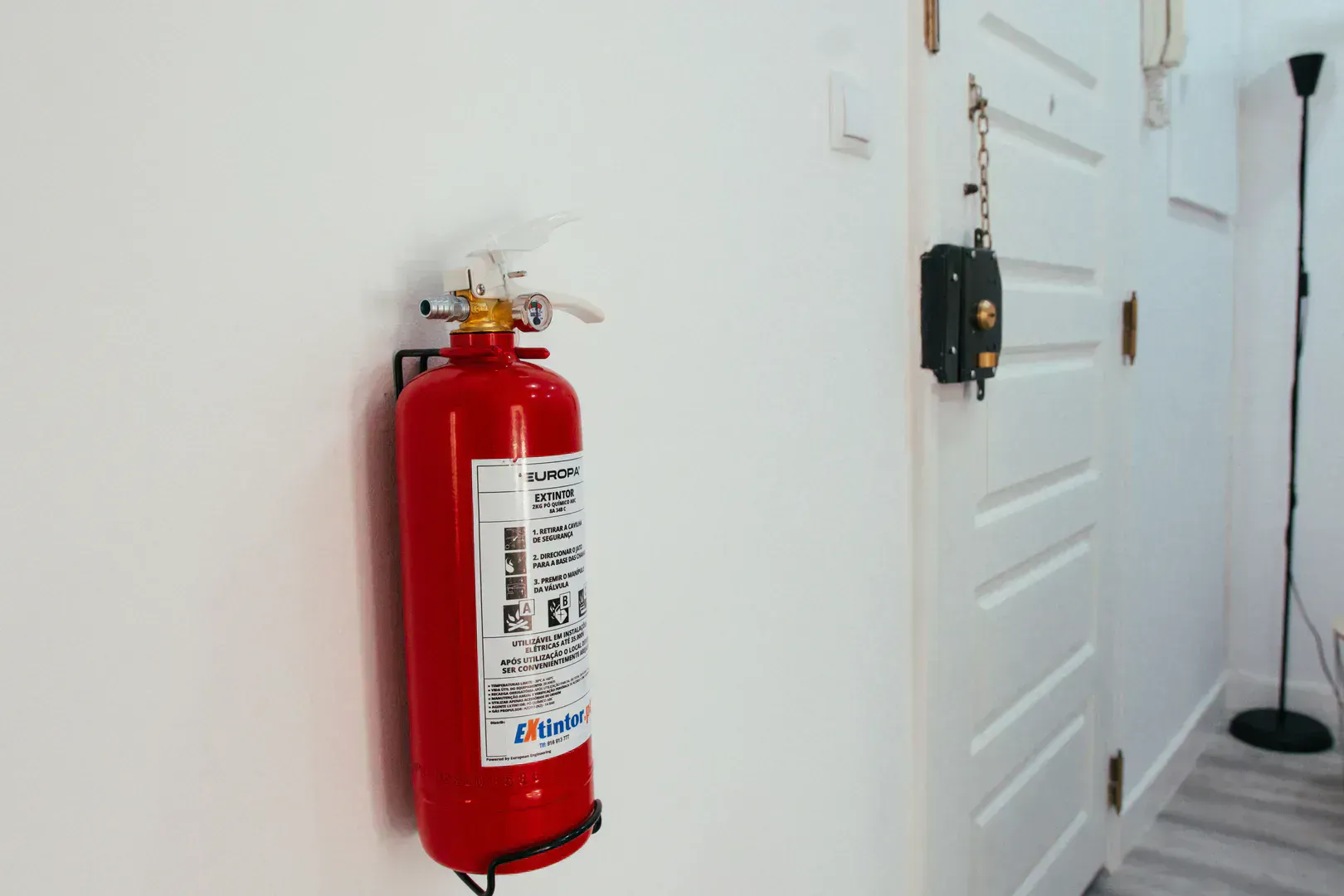
ABC extinguisher for
every fire that is not politely contained in a pan.
A blanket is one piece of safety equipmentRead the exact product instructions and limitations. A blanket does not replace alarms, an escape plan or emergency assistance.
01
The picks
All fiberglass, all multipacks. Size and extras are the choices.
Best for: covering the kitchen, garage, car, and grill in one purchase
Budget
This is the value math that makes fire blankets an easy yes. Four 40-inch blankets, four
pairs of gloves, and four hooks in one box means the kitchen, the garage workbench, the
car, and the grill each get covered without a second order. The blankets are dual-layer
fiberglass with a fire-retardant film, built to the EN-1869 standard named on the
listing, and rated on that listing to 1076 degrees.
The included gloves matter more than they look. Fiberglass is rough on bare hands and a
pan fire is hot at arm's length, so gloves hanging on the same hook as the blanket remove
the hesitation. One honest note straight from the manufacturer's own listing: the
blanket smothers the flame, but you still have to turn off the heat source underneath
it.
Size40 x 40 in
MaterialDual-layer fiberglass with fire-retardant film
Skip it if: you want one blanket big enough to wrap around a person or throw over a grill. The 47-inch pick below buys reach.
02
72 HRS Large Fire Blanket 4-Pack
Best for: the grill, the fire pit, the shop, and anyone who wants extra square footage
Mid-range
Size is reach, and reach is safety margin. The extra seven inches per side over the
standard packs means this blanket covers a wider pan setup, drapes fully over a grill
flare-up, and wraps further around a person if it ever comes to that. The listing backs
the size with substance: 100 percent fiberglass at 0.43 millimeters thick, which the
maker compares against a 0.3 millimeter category average, built to the ASTM F1989
standard.
One useful detail is the inspection card that comes with each pouch, next to
instructions printed right on the pouch itself. Fire gear fails silently by being
forgotten, and a check-the-box card borrowed from commercial practice is a cheap way to
keep a blanket from becoming wall decoration.
Trade-off: a bigger sheet is slightly more to control with one hand over a stove, which
is why it sits here and not at the top.
Size47 x 47 in
Material100% fiberglass, 0.43 mm thick
Standard on listingASTM F1989-2005
Rated heatUp to 1020 F (550 C)
In the box4 blankets, pouches with hooks, inspection card
Skip it if: the blankets will live in a kitchen drawer. The 40-inch packs are easier to handle one-handed over a stove.
03
Prepared Hero Emergency Fire Blanket 4-Pack
Best for: buyers who want the heavily advertised name and its packaging
Premium
Prepared Hero is probably the fire blanket you have seen advertised, and the product
itself is legitimate: two layers of woven fiberglass around a fire-retardant film,
pull-tab deployment, a hang slot, and a listed rating of 1076 degrees, the same figure
the budget pack claims. It is a competent blanket from a brand that spends heavily on
being seen.
The skeptical read is that visibility is most of what the premium buys. At 39 inches it
is the smallest sheet on this page, the pack skips the gloves the JJ CARE box includes,
and the construction described on the listing tracks the cheaper packs nearly spec for
spec. If the name helps a blanket actually get bought and mounted in your house, that is
worth something real. If not, the picks above do the same job with more material or more
extras.
Size39 x 39 in
MaterialTwo layers of woven fiberglass with inner fire-retardant film
Skip it if: you are shopping the spec sheet. The construction matches the budget pick nearly line for line, at a higher typical price and an inch smaller.
02
How to choose
Size, standards, and the limits nobody prints in bold.
First
Size first
Around 40 inSquare, the kitchen standard
47 inFor a grill, a fire pit, or a shop
The 40-inch size is big enough to blanket any pan or small trash can, small enough to control one-handed.
Go to 47 inches when the blanket's beat includes a grill, a fire pit, or a shop, where the fires are wider and a person-wrap is more plausible.
Second
Standards second
The listings here name EN-1869 and ASTM F1989, the European and North American fire blanket standards.
The quality split: a listing that names a standard and a heat rating beats a listing that says only "fireproof," which is the actual quality split in this category.
Third
Extras third
Gloves and mounting hooks decide whether the blanket is usable in the bad thirty seconds.
Multipacks that include them earn their spot.
The methodology behind how we weigh claims like these lives at
how we pick gear.
03
How to use one
Practice the grab once. The rest is laying down a sheet.
Pull the tabs straight down. Blankets store folded in a quick-release pouch
with two tabs hanging out the bottom. One sharp pull frees the sheet. Mount the pouch where you
can reach it without leaning across the stove.
Protect your hands. Put on the included gloves if your pack has them, or roll
the top corners of the blanket over your hands. Your hands lead the blanket toward the flame and
they take the radiant heat first.
Lay it over, away from you. Hold the blanket up as a shield and lay it over the
pan from the near edge away, so flames push away from your arms. Cover the whole fire. Draping
half a fire is feeding it air through the gap.
Kill the heat. Turn off the burner, or for anything plugged in, cut the power.
The blanket stops the flame; the element underneath is still trying to restart it until the
energy is off.
Leave it alone until cold. Walk away for a good half hour minimum. The pan
under the blanket stays above ignition temperature far longer than feels right, and an early
peek can relight it. When everything is cold, the blanket that did the work gets replaced, not
refolded.
04
The blanket and extinguisher pairing
Two tools, two different fires.
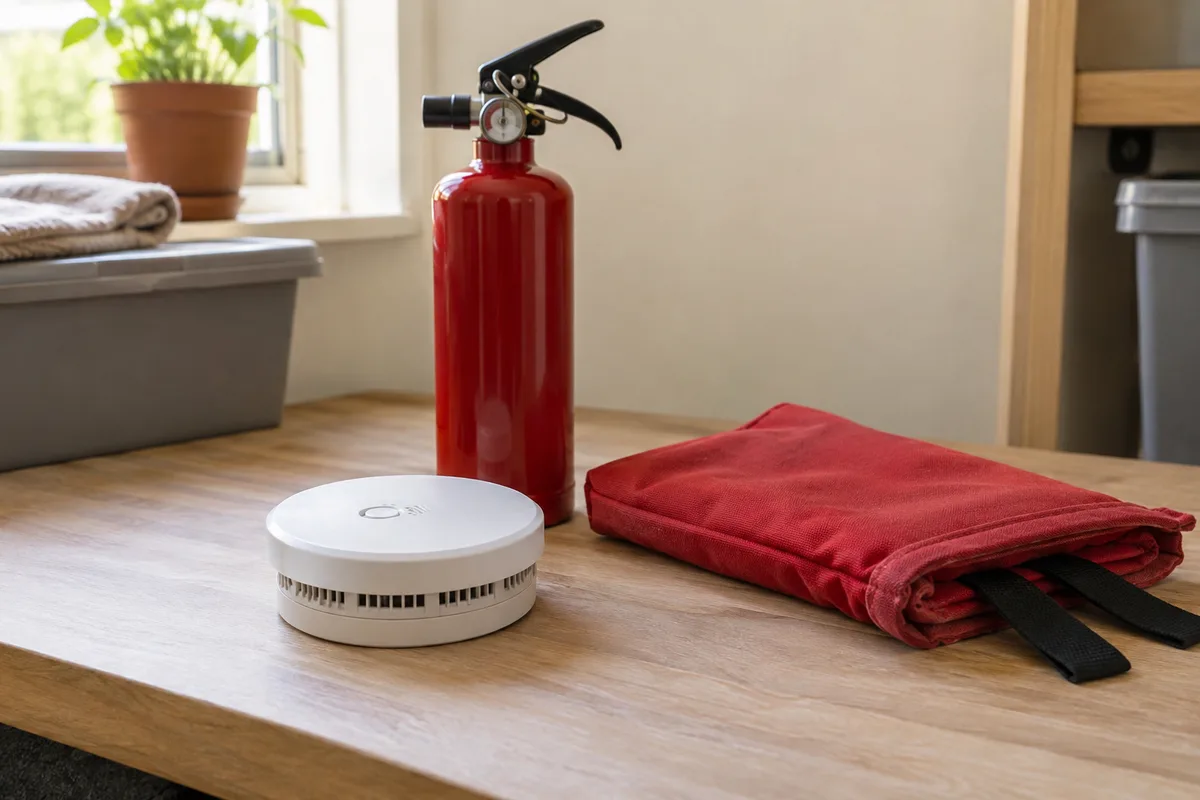
The extinguisher takes every fire that spreads past the pan.
The blanket is the first grab for the contained pan fire because it is mess-free and
aim-free. The extinguisher lineup
is the answer for everything with ambition:
a fire spreading past the pan
anything in the garage
anything you cannot safely stand next to
05
Fire blanket questions
Materials, limits, and the extinguisher question.
Should a kitchen have a fire blanket?
Yes, alongside an extinguisher rather than instead of one. A pan fire is the most likely fire a kitchen will ever see, and a blanket handles it without aiming anything and without coating the room in dry chemical powder. Hang it where you can grab it without reaching across the stove, and keep the extinguisher for anything a blanket cannot smother.
Which is better, a silicone or fiberglass fire blanket?
The kitchen blankets sold for homes, including every pick on this page, are woven fiberglass, usually layered with a fire-retardant film. Silicone-coated versions add flexibility and skin comfort and show up more in welding and industrial sizes. For smothering a pan on a stove, plain fiberglass built to a published standard does the job; the coating is a nice-to-have, not the deciding spec.
What are the disadvantages of using a fire blanket?
You have to get close. A blanket only works at arm's length from the fire, it only covers what it can physically blanket, and it does nothing for flames that have already spread past pan scale. Bare fiberglass can also irritate hands, which is why the multipacks that include gloves are worth a small premium. And treat any blanket that has smothered a real fire as spent: replace it rather than refolding it.
Can a fire blanket put out all fires?
No. It is built for small, contained fires caught early: a pan on the stove, a small trash can, a flare-up at the grill. The blanket works by cutting off oxygen, so anything too large to cover completely, anything climbing a wall, or anything inside a cabinet or appliance is beyond it. If covering the fire completely is not obviously possible, skip to the extinguisher or get out and call 911.
Is a fire blanket better than a fire extinguisher in the kitchen?
It is better for exactly one fire: the contained pan fire. No aim, no sweep, no cloud of powder over every surface in the room. The extinguisher is better for everything else, because it works from across the room and keeps working on a fire that is spreading. The honest answer is both, mounted in different spots, with the blanket closer to the stove.