The bad scenario
It contains a lint fire
- Solid metal contains a lint fire far better than foil.
- The NFPA's dryer fire data points at lint buildup as the leading factor, and buildup happens slowest in smooth pipe.
Heads up: this page has affiliate links. As an Amazon Associate, Vent & Valve earns from qualifying purchases at no extra cost to you. Full disclosure.

The short answer
Rigid metal for every concealed foot, UL 2158A-listed semi-rigid aluminum for the visible transition behind the dryer. A UL 2158A-listed flexible-metal duct is an acceptable exposed option when its connector solves an access problem, but it is not semi-rigid and should stay short and uncrushed. Unlisted foil, vinyl, or plastic hose should come off the dryer.
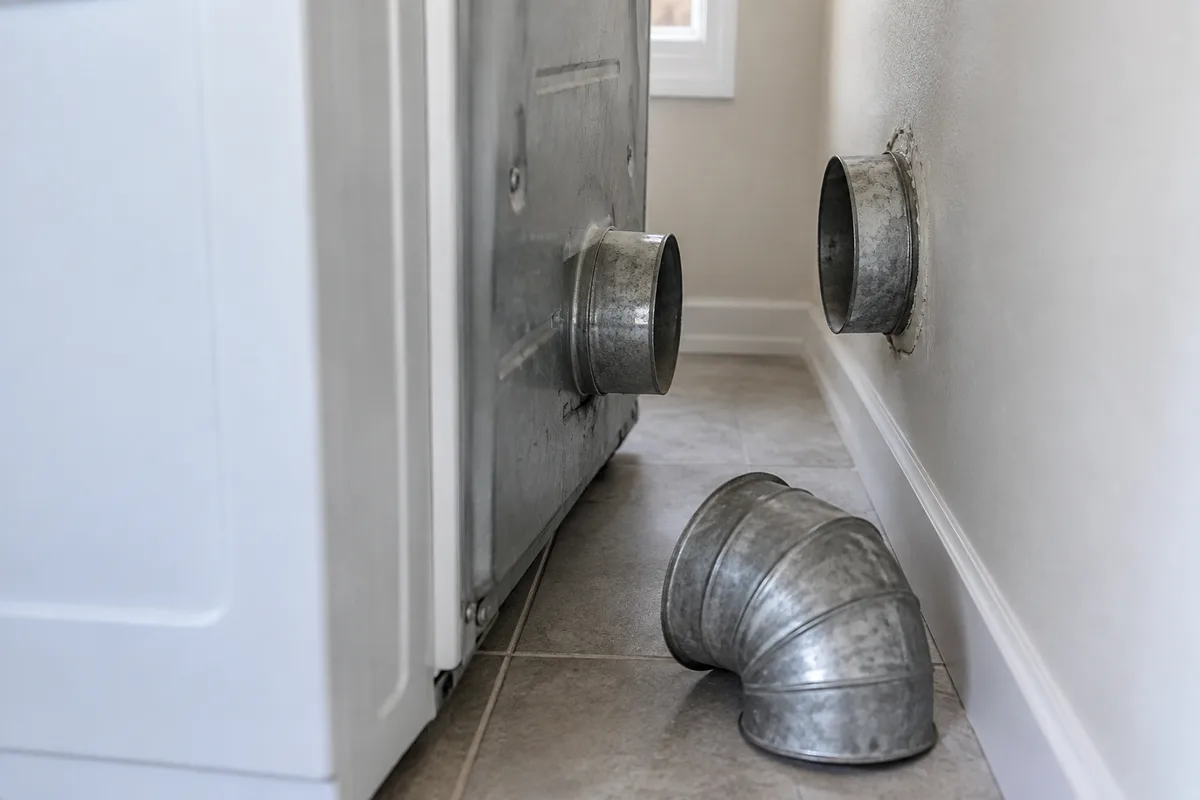
Here is the whole picture in one table, then the case for each.
| Spec | Rigid metal | Semi-rigid aluminum | Listed flexible metal |
|---|---|---|---|
| Airflow | Best. Smooth interior wall, minimal drag | Good. Light ribbing, holds a smooth bore | Fair. Deeper corrugations add drag and catch more lint |
| Fire resistance | Best. Solid metal, contains heat | Good. Solid aluminum wall | Listed for dryer-transition temperatures and flame resistance |
| Where code allows it | Anywhere, including walls and ceilings | Exposed transition only, UL 2158A listed, 8 ft max | Exposed transition only, UL 2158A listed, 8 ft max |
| Lint buildup | Slowest | Moderate | Faster than semi-rigid because the wall is more corrugated |
| Crush resistance | Excellent | Holds shape, kinks if forced | Can kink or flatten; connector protectors only guard the ends |
| Typical lifespan | Decades | Years, replace if kinked | Inspect during duct cleaning; replace if kinked or torn |
The duct your house should have everywhere you cannot see.
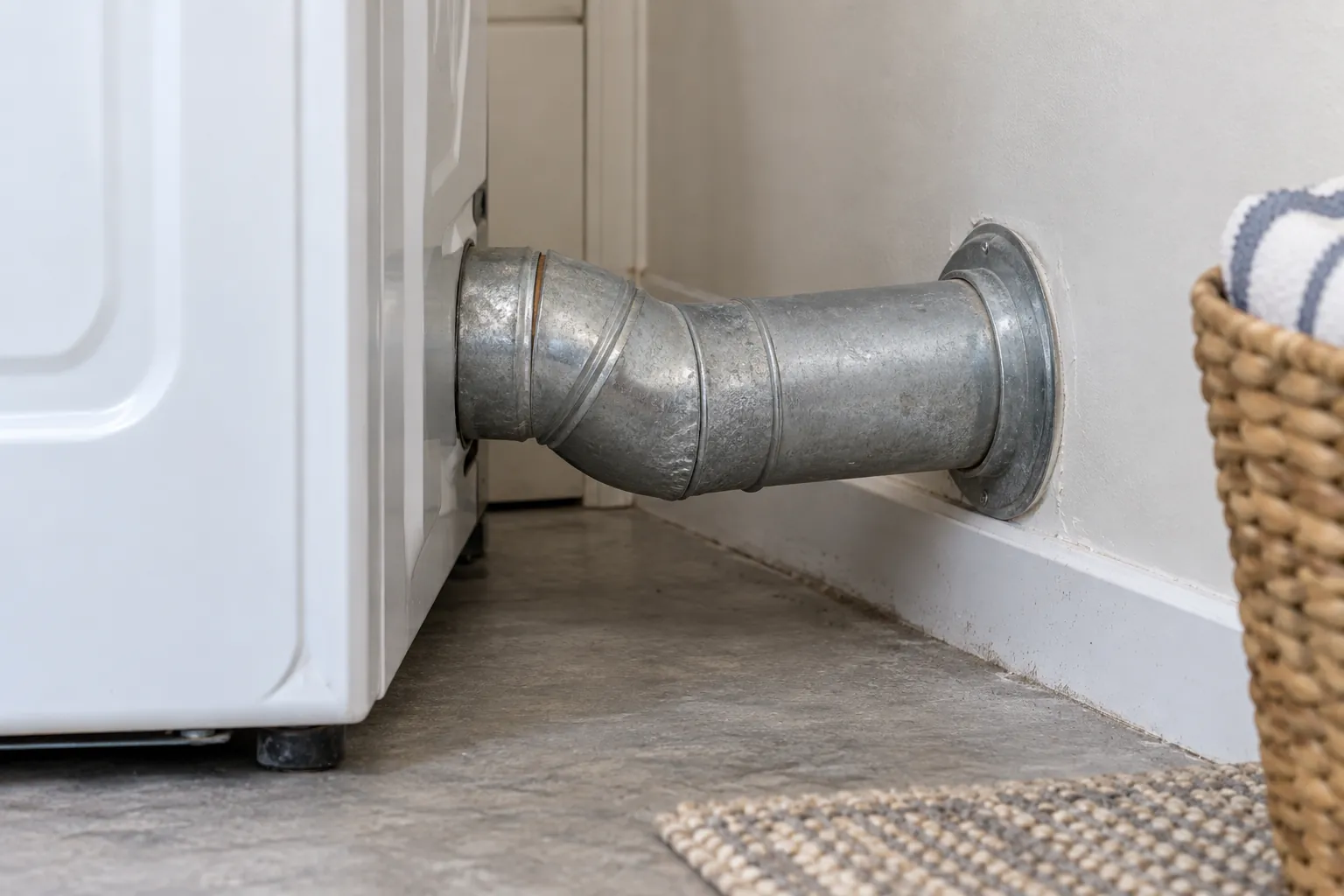
Rigid galvanized or aluminum pipe is what the residential code requires for any concealed dryer duct, and the reasons are practical.
The bad scenario
Assembly
Never screws, which poke into the airstream and snag lint.
The right answer for the part you can see.
The transition between the dryer outlet and the wall collar has to flex a little, because you need to pull the machine out to clean behind it. Semi-rigid aluminum is the best compromise there.
The best compromise
Upgrade: it is a practical upgrade when foil hose is crushed flat behind the machine, a restriction that can contribute to slow drying. That exact failure is cause number two in our two-cycles-to-dry guide.
The material alone is not enough: use one exposed length that carries the UL 2158A listing and does not exceed eight feet.
Acceptable in one narrow lane, but not the same as semi-rigid.
Strength
Tradeoff
If the laundry closet leaves so little room that any round duct gets crushed, check the measurements and manufacturer limits in our tight-spaces hose roundup instead. Thin unlisted foil and white vinyl are not substitutes for listed transition duct; replace either one rather than trying to flatten it into the gap.
A number that gets thrown around
No stamp? If the duct on your dryer today carries no listing stamp, treat it as unlisted and plan the swap.
Code source: The 2024 International Residential Code, Section M1502.4.3 requires any dryer transition duct to be one exposed length, listed and labeled to UL 2158A, and no longer than eight feet. Local code adoption and amendments can vary, so also follow the dryer instructions and local requirements.
Match the duct to the run you actually have.
Situation
Why: do it once and the system stays cleanable for the life of the house.
Situation
Situation
Difficult connector access is the real problem? Exact-model HUPK8F is a listed flexible alternative, not a semi-rigid equivalent. Keep it short and confirm the UL 2158A mark.
Situation
Quick check
Pull the dryer out and look at three things:
The rest of the system, covers and cleaning gear included, lives on the dryer vents hub.
The ones people actually search, answered straight.
A UL 2158A-listed flexible-metal duct is allowed only as a short, exposed, uncrushed transition behind the dryer. Thin unlisted foil, vinyl, and plastic flex do not belong on a dryer. For anything concealed, rigid metal is the safe answer.
Eight feet is the code maximum for any transition duct, and shorter is better. The transition must be one exposed length that is listed and labeled to UL 2158A, regardless of whether it is semi-rigid or flexible metal. Everything past the wall should be rigid metal duct.
Rigid is better everywhere you can use it: smoother airflow, less lint buildup, and far better fire resistance. A listed semi-rigid aluminum transition usually handles the exposed connection better than thin foil, but it still must carry the UL 2158A label and stay within eight feet.
No. Concealed dryer duct must be smooth-wall rigid metal under the residential code that nearly all US jurisdictions use. Flex hose hidden in a wall or ceiling cannot be cleaned, collects lint at every ridge, and is a documented fire path.
Gas dryers always, no exceptions, because the exhaust carries combustion byproducts. Electric dryers need a duct to the outdoors in nearly all cases too. Indoor lint-trap kits exist for electric machines only and come with real humidity tradeoffs, which we cover separately.
Compare the gear or work through the next step.
 Explainer Roof Dryer Vent Cleaning: Tools and Risks
 Roundup The Best Dryer Vent Cleaning Kits for Long Vents
 Roundup The Best Dryer Vent Hoses for Tight Spaces
Put it on the seasonal maintenance checklist or browse all guides.