The Best Water Hammer Arrestors for Washing Machines
SystemPlumbing
Job typeRoundup
BySam Whitlock
UpdatedJune 2026
Heads up: this page has affiliate links. As an Amazon Associate, Vent & Valve earns from qualifying
purchases at no extra cost to you. Full disclosure.
Match the arrestor connection to the applianceCheck the exact threaded connection, installation location and manufacturer instructions. Similar arrestors can serve different plumbing connections.
01
The picks
Two screw-on pairs for the washer, one fitting for everywhere else.
Best for: most laundry rooms. The cheapest correct fix for a banging washer fill
Budget
This is the no-drama answer. The pair threads onto the hot and cold washer valves, the
swivel end means you tighten the nut without spinning the whole body, and the fill-cycle
bang stops that day. The rating on the listing is 250 PSI working pressure, which is far
past anything a house should ever see, and the body can sit horizontal or vertical, so it
does not care which way your valves point.
The honest knock is the paperwork. EFIELD is a budget parts brand, and the listing gives
you a pressure number and not much else. For a sealed fitting at this price that is a
trade most laundry rooms can live with. If you want the longer pedigree, spend up one
rung.
Fittings3/4 in female swivel hose thread x 3/4 in male hose thread
Skip it if: you want a name your plumber would recognize on sight. The Sioux Chief pair below is the same job from the brand in the plumbing aisle.
02
Sioux Chief 660-H Mini-Rester Pair
Best for: the buy-once pick from the brand the trades actually install
Mid-range
Sioux Chief is a plumbing-parts house out of Missouri, and the Mini-Rester is the arrestor
version of buying the part your plumber would have grabbed anyway. Same 3/4-inch swivel
hose fitting, same ten-minute install at the washer valves, brass and stainless in the
build, and a manufacturer that publishes actual installation guidance instead of a
marketplace bullet list.
That guidance includes the most useful sentence in the category: systems running above 60
PSI static pressure should have a pressure reducing valve upstream of the arrestor. Read
that as a hint, not fine print. If your house pressure is high, an arrestor muffles the
symptom while the pressure keeps beating on every valve and hose in the building,
including the washer hoses you least
want failing.
Fittings3/4 in female swivel hose thread x 3/4 in male hose thread
BodyBrass, stainless steel, and polypropylene
Install pointWashing machine supply valves
Pressure noteAbove 60 PSI static, maker calls for a PRV upstream
Skip it if: the budget pair already solved it. Both do the same job at the same fitting; this one costs more for the brand and the spec sheet.
03
SharkBite Max Water Hammer Arrestor
Best for: banging at fixtures that have no hose thread, on accessible 3/4-inch pipe
Premium
Hammer is not only a laundry problem. Dishwashers, ice makers, and fast-closing
single-lever faucets slam valves too, and none of them give you a handy hose thread to
screw an arrestor onto. This SharkBite fitting solves that without soldering: it pushes
onto cut 3/4-inch PEX, copper, CPVC, PE-RT, or SDR-9 HDPE, works on wet lines, and can be
rotated or mounted in any orientation once seated.
Respect what push-to-connect means here. You are cutting pipe, deburring it, and trusting
an O-ring fitting inside your supply line, and getting it back off needs a disconnect
clip that does not come in the box. It is the right tool for hammer beyond the laundry
room, and overkill for hammer in it.
Our picks here are judged on fittings, materials, and published guidance rather than
staged bench tests; the methodology lives at how we pick gear.
03
The ten-minute install
Same thread as a garden hose, and it behaves like one.
Close both valves. Shut the hot and cold washer valves and start a fill cycle for a few seconds to bleed the pressure out of the hoses. Keep a towel down; each hose holds about a cup.
Unscrew the hoses from the valves. Counterclockwise, by hand if you are lucky, with channel locks if you are not. Steady the valve body with your other hand so the pipe in the wall never takes the twist.
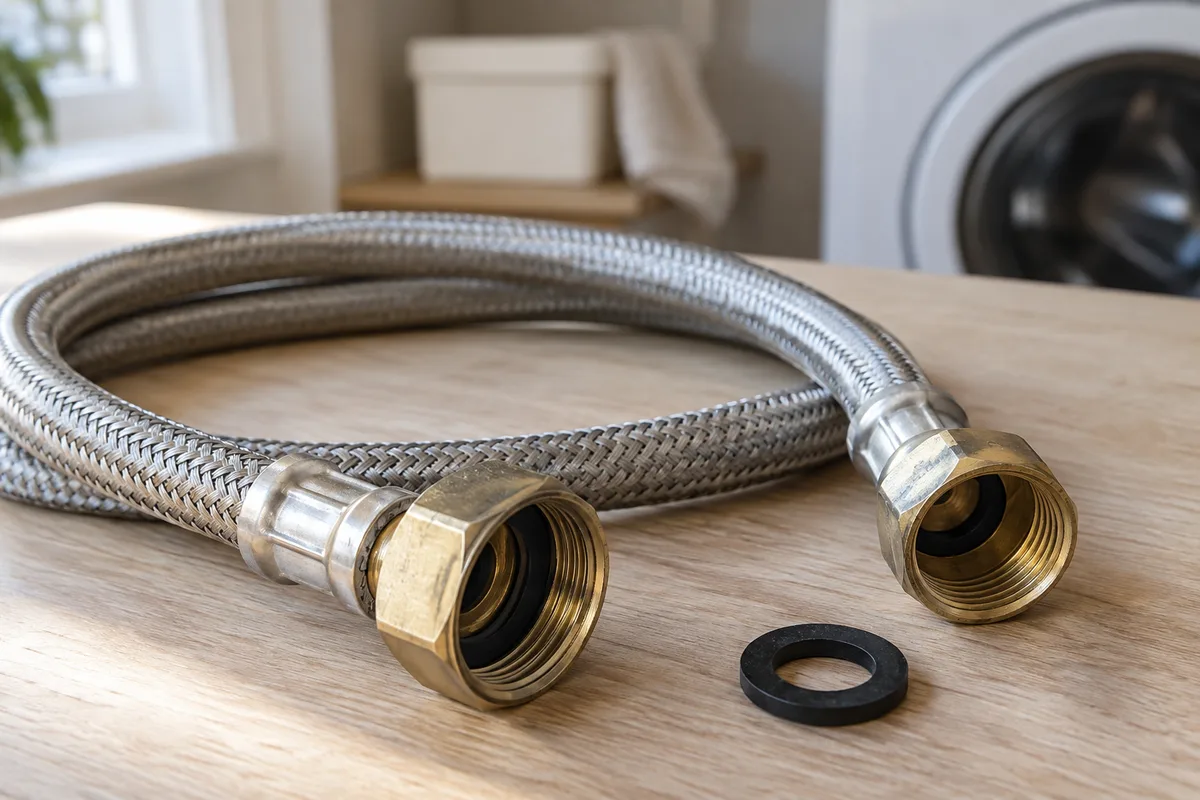
Thread an arrestor onto each valve. The female swivel end goes on the valve. Hand-tight plus a small snug with pliers is plenty; the washer inside the fitting does the sealing, not torque. No tape on hose threads.
Reconnect the hoses. The supply hose threads onto the arrestor's male end exactly as it sat on the valve. Keep hot on hot and cold on cold, and let the hoses hang in a relaxed arc without kinks.
Open the valves and run a fill. Open both valves slowly, watch each new joint for a minute, then run a rinse-and-spin cycle and listen for the moment the fill valve closes. Silence is the whole point. A weep at a fitting means the washer is cocked: back it off, reseat, retighten.
04
Water hammer questions
Clunks, placement, and whether arrestors actually work.
Why does my washing machine clunk when filling with water?
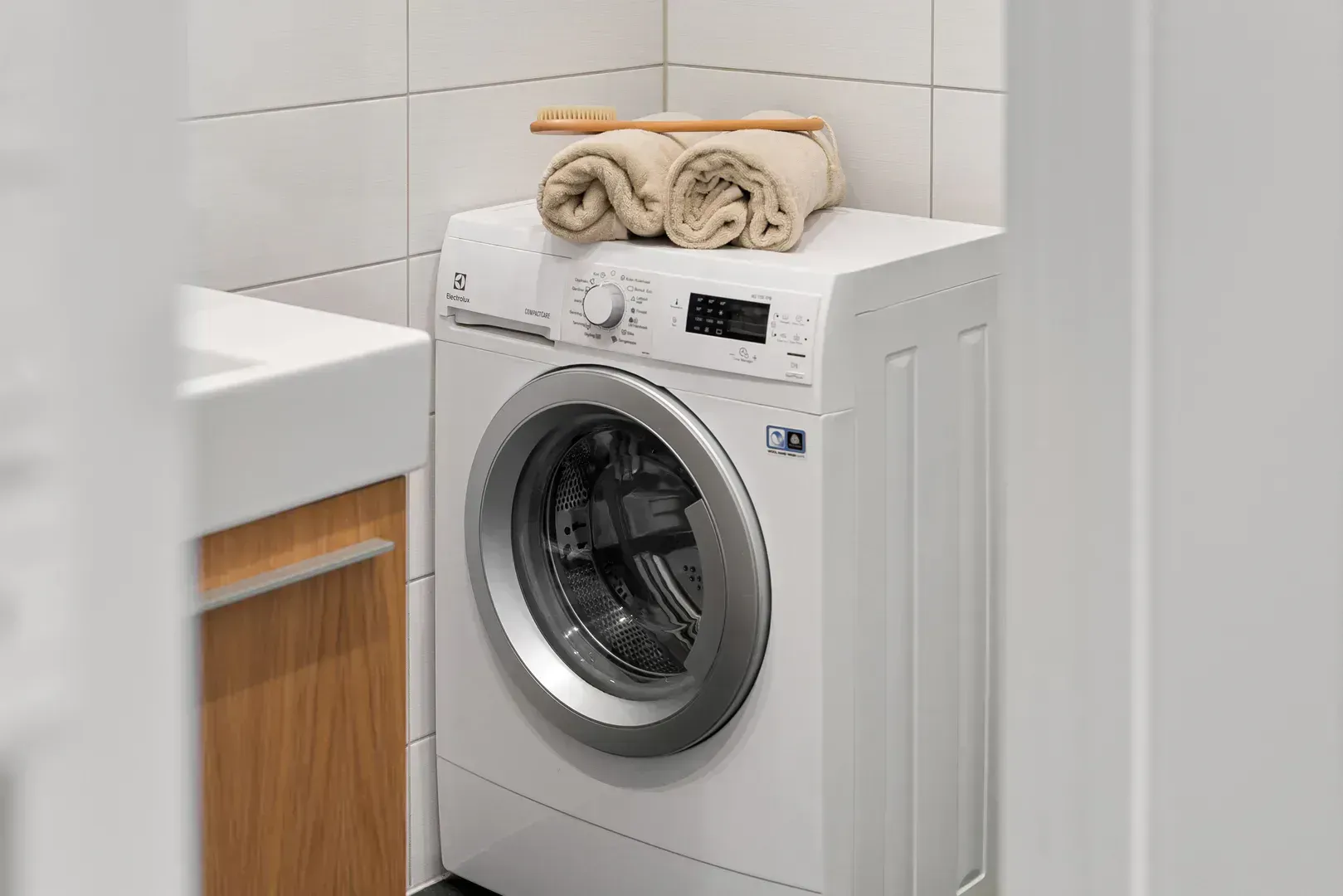
The fill valve inside a washer is a solenoid, and it snaps shut in a fraction of a second. The water rushing toward it has momentum and nowhere to go, so it slams into the closed valve and sends a pressure spike back through the pipes. That spike is the clunk. A single thud right when the filling sound stops is the classic signature. Clunking during agitation or spin is mechanical and lives inside the machine, not the pipes.
Where does a water hammer arrestor go on a washing machine?
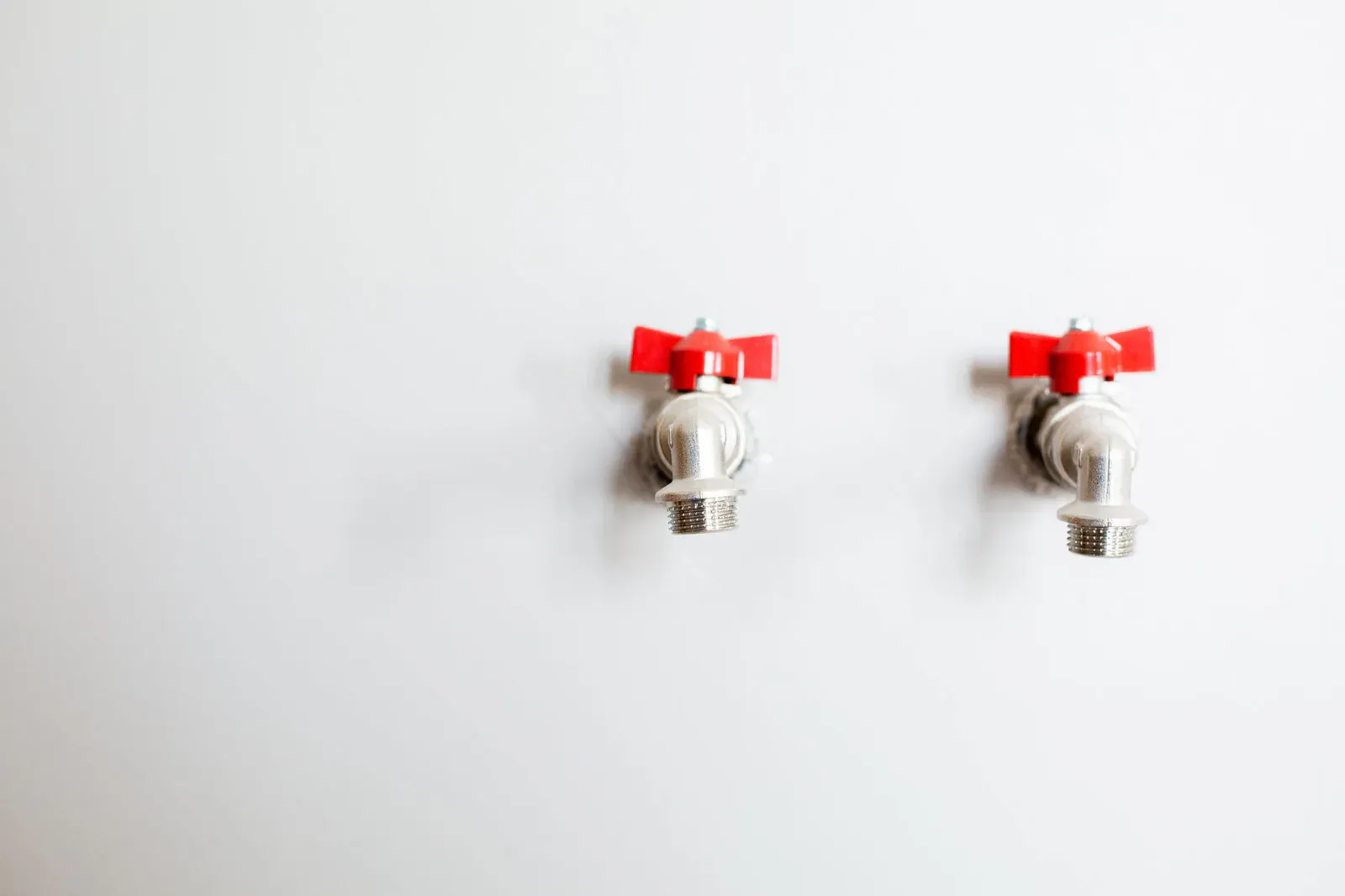
Between the shutoff valve and the supply hose. Unscrew the hose from the valve, thread the arrestor onto the valve, and thread the hose onto the arrestor. You need two, one for hot and one for cold, which is why the washer-style arrestors here sell in pairs. Both fittings are the same 3/4-inch hose thread as the hose itself.
Can you install a water hammer arrestor yourself?
The washer-valve style, absolutely. It threads on like a garden hose and the whole job is ten minutes with a towel and maybe a pair of pliers. The in-line style that tees into the pipe itself is a real plumbing task: it needs pipe access and a cut-in, so it lands in DIY territory only if you are already comfortable opening up supply lines.
How do you find the source of the water hammer?
Note what was running when the bang happened. A thud at the end of the washer fill is the washer valve. A bang when the dishwasher or ice maker cycles points there. A bang when you snap a single-lever faucet closed is that fixture. Hammer follows fast-closing valves, so the appliance that just stopped drawing water is almost always the culprit.
Do water hammer arrestors work?
For valve-slam hammer, yes. The arrestor gives the moving water a cushion to land on instead of a hard stop, and a screw-on pair at the washer valves usually kills the bang on the first fill cycle. If banging continues, look at house pressure and loose pipes. Sioux Chief's installation guidance calls for a pressure reducing valve when static pressure runs past 60 PSI, and a pipe that is not strapped down will knock against framing no matter what you screw onto the valve.