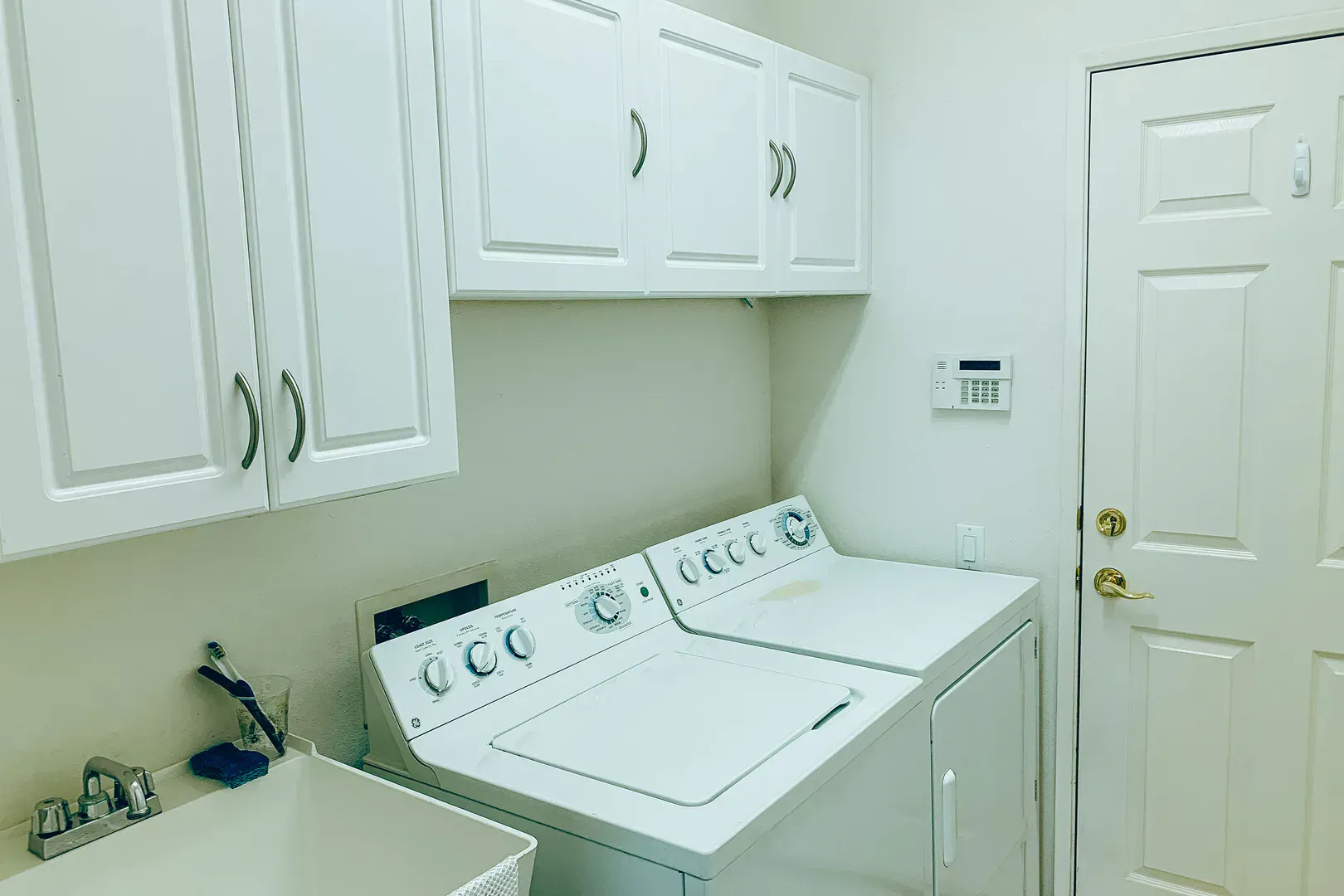
Do not move the appliance or reach behind it to find a gas valve during a suspected leak.
No emergency
An unexplained burning smell
Without an emergency, keep the appliance out of use while the cause is checked.
Follow the exact manufacturer's shutdown instructions only when it is safe to do so.
Samsung's odor guidance, for example, calls for switching off power at the breaker and requesting service for an electrical smell or continuing burning smell.
This does not override gas-leak or fire precautions.
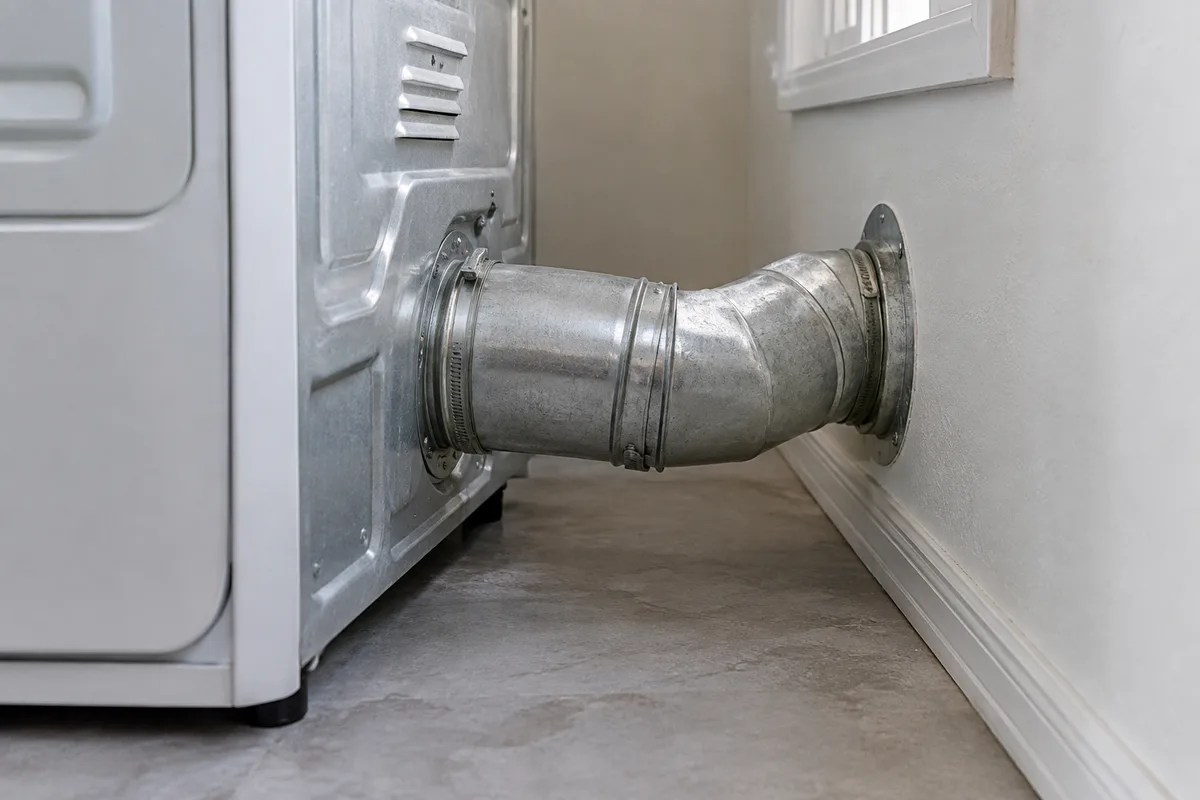
Treat a burning smell as a stop signalDo not restart a dryer that smells hot or burnt. Follow the stop and escalation guidance above before investigating the exhaust connection.
02
What the symptoms can tell you
These are clues to report, not a diagnosis or a likelihood ranking.
Longer drying times or a damaged vent connection
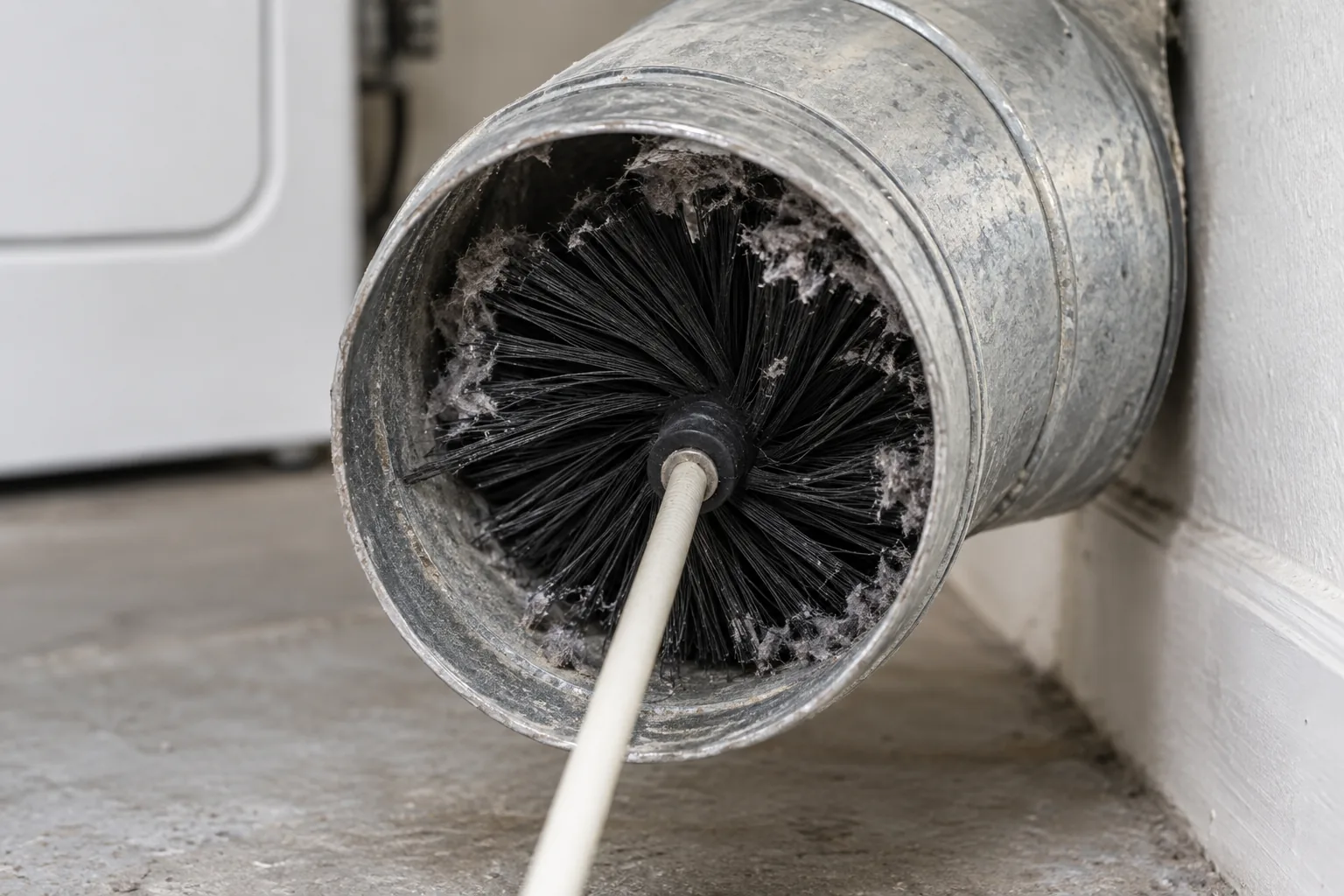
Lint or restricted airflow may be involved.
A blocked duct is not the only possible fault.
Scorched fabric or something melted in the load
Note the fabric and cycle setting for the technician.
Do not reach into a hot or smoking drum.
An electrical or rubber-like odor
Smell alone cannot distinguish wiring, a motor, a belt or another source.
Keep the dryer off and arrange service.
A brand-new dryer
Some manufacturers describe a limited first-use odor.
Keep it off until you have confirmed that the exact model's guidance applies or a technician has resolved the cause.
There is no universal number of cycles to wait before acting.
03
What to record without running it again
After any emergency has been resolved, gather what you already know. Do not create another hot cycle or move the dryer to complete this list.
Notes for the technician
The model number from paperwork or an accessible label, and whether the dryer uses gas or electricity.
When the odor appeared, the selected cycle, the load type and any error message.
Any recent installation, repair, unusual sound or change in drying time.
Visible connection damage or lint accumulation that can be observed from a safe position.
04
Resolve the cause before using the dryer
Call for service. For a persistent or unexplained odor, contact the manufacturer or a qualified appliance technician.
Report what you saw. Explain the symptoms above and ask whether the appliance, its exhaust path or both need inspection. CPSC recommends qualified service for cleaning inside the dryer chassis.
Wait for the fix. Resume use only after the cause has been identified and addressed under the manufacturer's instructions or qualified service guidance.
Keep it off while an unexplained burning smell is investigated. Do not run a heat cycle to reproduce it. Smoke, suspected fire or suspected gas calls for leaving the building and contacting help from outside. Otherwise, follow the exact manufacturer's troubleshooting instructions and arrange qualified service if the cause is unclear.
How long do new dryers smell burnt?
There is no safe one-week or fixed-cycle allowance for every dryer. Some manufacturers describe a specific first-use odor and procedure. Check the instructions for your exact appliance or contact its manufacturer before treating a burning smell as normal. Smoke, electrical odors or a persistent unexplained smell need a different response.
Can a blocked dryer vent cause a burning rubber smell?
A restriction can contribute to overheating, but a rubber-like odor does not identify the failed part or prove that the vent is the cause. Report the smell and other symptoms to a qualified technician; do not use odor alone to choose a belt, motor or cleaning tool.
Is burning dryer lint toxic?
Smoke is hazardous to breathe. Leave a smoke-filled area and call 911 from outside if you suspect a fire. Do not stay beside the dryer to identify the burning material, clean it or ventilate the room.
What are the signs of a dryer fire?
Smoke or flames are immediate reasons to leave and call 911. An intensifying burning odor or signs of scorching also require urgent attention; the absence of visible flames does not establish that the dryer is safe. Do not approach a suspected fire to unplug the dryer or open its cabinet.